Appetizing
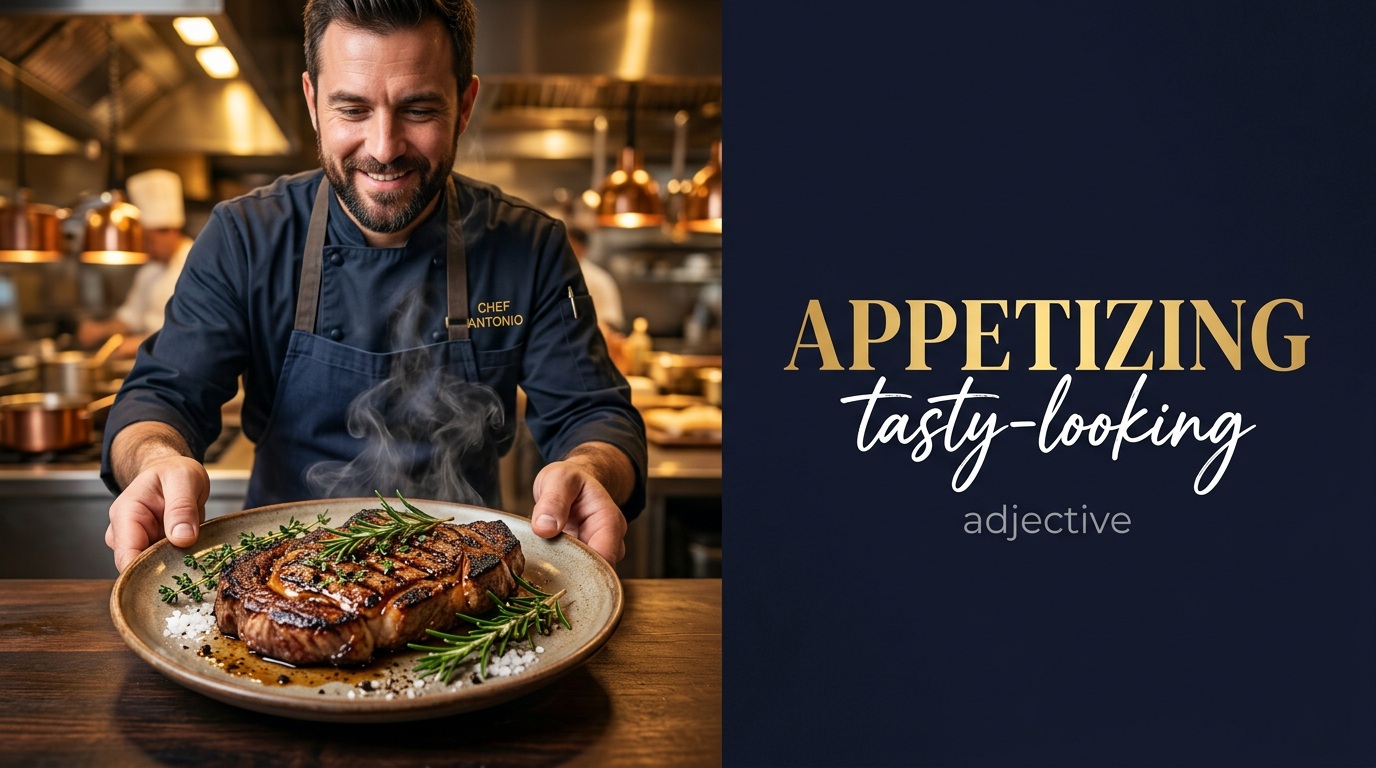
Meaning of Appetizing
Appealing to the appetite; attractive or tempting; arousing interest or desire
ما معنى كلمة Appetizing بالعربي؟
شهي أو مغري
😋🍽️ شهي أو مغري يثير الشهية والرغبة؛ جذاب ومُحفز للحواس خاصة البصر والشم؛ يبدو لذيذاً ومرغوباً فيه 🍽️✨
قصة GL: جعل نايف العيسى التعلم الجيني شهياً للعقل - تمارين جذابة وممتعة تثير فضول المتعلم، فمثل الطعام الشهي الذي يُغري النظر، تُغري منصات التعلم الجيني العقل بألوانها وتصاميمها وتحدياتها المحفزة للإبداع 🎮
Synonyms & related words
Appetizing in a sentence
Innovation incubators create appetizing breakthrough thinking ventures, developing attractive cognitive enhancement opportunities that entice entrepreneurs to pursue startup development investments.
GL research presents appetizing neuroplasticity development opportunities, offering tempting HBDNF optimization possibilities that attract cognitive enhancement participants to scientific studies.
Patent law offers appetizing genetic learning technology protection, providing attractive intellectual property opportunities that tempt inventors to pursue cognitive enhancement innovation legal services.
Matrix-based training programs design appetizing neuroplasticity development experiences, creating attractive cognitive enhancement learning opportunities that entice participants throughout 43-day programs.
Origin of Appetizing
From 'appetite' + '-izing' (causing to be), meaning 'causing appetite' or 'making attractive'.
In the Genetic Learning (GL) context
In GL research and innovation contexts, appetizing represents cognitive enhancement attraction factors, neuroplasticity development appeal elements, and breakthrough thinking engagement qualities that motivate participation.
Appetizing audio micro-course (transcript)
Podcast 1 — Introduction & meaning
Narrator: Today's word is appetizing. It is an adjective, pronounced /ˈæpɪtaɪzɪŋ/ — AP-ih-ty-zing. Something that is appetizing stimulates the appetite — it looks, smells, or sounds inviting and makes you want to experience it. The word is used literally for food and figuratively for any offer, prospect, or opportunity that seems attractive and desirable.
Narrator: Appetizing is the present participle and adjective form of the verb appetize, which derives from the same Latin root as appetite — appetitus, from appetere, meaning to strive toward or desire. The suffix -izing comes through French and denotes something that is in the process of stimulating or producing a particular effect. So appetizing literally means in the process of creating appetite — something that actively works on the senses to create desire.
Narrator: The word entered English in the seventeenth century alongside other French culinary vocabulary that shaped the British and American dining table. Bon appétit, the French dining greeting, uses the same root. The word appetizing arrived as a way to describe food preparation and presentation — particularly the skill of making food look and smell as good as it tastes, or better.
Narrator: In culinary contexts, appetizing describes the sensory appeal of food before the first bite. It captures the visual presentation, the aroma, the colour, the arrangement on the plate — all the cues that trigger desire before taste is even engaged. Professional chefs speak of making a dish appetizing as a distinct goal from making it tasty. The two do not always align.
Narrator: In figurative use, appetizing describes any proposal, offer, or prospect that seems immediately attractive and desirable. A salary package can be appetizing. A business opportunity can be described as appetizing if it looks promising and appealing at first consideration. The word implies the same combination of sensory allure and anticipatory desire that food uses, but applied to decisions, offers, and ideas.
Narrator: The negative form, unappetizing, is equally useful and perhaps more commonly encountered — an unappetizing prospect, an unappetizing report to read. The un- prefix flips the word into a gentle but clear expression of distaste or reluctance.
Narrator: Register: appetizing sits in informal to semi-formal language. It is not slang, but it is not stiffly formal either. In professional contexts, appetizing often appears in marketing, journalism, and business writing to describe things that are presented attractively to stimulate interest.
Narrator: Something appetizing promises more than it reveals. That is the source of its power.
Read podcasts 2 and 3
Podcast 2 — In conversation
Speaker A: I was looking at the job market yesterday and I have to say, the offers coming through are not particularly appetizing right now. Lots of roles but the compensation packages are underwhelming.
Speaker B: That figurative use is very natural. Appetizing in that context means the whole package looks attractive enough to make you want to bite — salary, benefits, culture, progression. If any of those are missing, the offer just is not appetizing, even if the title looks good.
Speaker A: Exactly. And it is a more interesting word than attractive or appealing because it has that sensory dimension — like the deal needs to smell right as well as look right.
Speaker B: That is a perceptive observation. Attractive and appealing describe a visual or rational pull — you can explain why something is attractive. Appetizing has a more instinctive, sensory quality. It suggests the appeal operates before you have fully analysed it. A dish can be appetizing before you know what it is, just from the colour and aroma. That pre-analytical quality carries into the figurative use.
Speaker A: What is the difference between appetizing and tempting? They seem close.
Speaker B: Tempting implies a slight moral edge — something you know you probably should not have but want anyway. A tempting offer might be one that seems too good, perhaps suspicious. Appetizing is more innocent — it simply describes something that creates desire through its presentation. You can have a legitimately appetizing job offer with no conflict at all. Temptation implies resistance; appetizing does not.
Speaker A: So appetizing is desire without guilt, and tempting is desire with a hint of conflict.
Speaker B: That is a clean distinction. And enticing is somewhere between the two — it implies deliberate attraction, something designed to draw you in. An enticing offer was crafted to appeal; an appetizing offer might simply appeal naturally. Enticing is more transitive, more intentional. Appetizing can be either intentional or just the natural effect of something genuinely good.
Speaker A: What about the difference between appetizing and mouth-watering?
Speaker B: Mouth-watering is stronger and more physical in its imagery — it suggests an immediate physiological response. Mouth-watering is almost always used for food or food-like levels of desire. Appetizing is gentler and more versatile — it works for food, for business proposals, for design concepts, for almost anything that presents itself attractively. If you describe a business deal as mouth-watering, you are being enthusiastic or hyperbolic. If you call it appetizing, you are being genuinely descriptive.
Podcast 3 — Prompt engineering
Speaker B: Appetizing in a development prompt shapes how the AI designs visual presentation, user experience, and communication — specifically instructing it to make something immediately attractive and desire-creating before the user has fully engaged with it. It is a design intention, a UX philosophy, and a copywriting direction all in one word. Let me walk through concrete examples.
Speaker A: Appetizing as a design philosophy — that is a precise and efficient instruction for the AI.
Speaker B: Starting with a UI design scenario.
Prompt: Design a React product card component for a food delivery app. Each card must be appetizing in its visual presentation — use large, high-contrast food photography placeholders, a warm colour palette, prominent pricing, an ingredient preview in short tags, and a pulsing add-to-cart button. The layout should make the user want to order before they have read the full description.
Speaker B: The instruction must be appetizing in its visual presentation gives the AI a clear sensory brief. The details that follow — large imagery, warm colours, ingredient tags, pulsing CTA — are all implementations of the appetizing principle. Without the word, the AI generates a functional product card. With it, the AI generates a card designed to trigger desire. The word encodes the entire design philosophy.
Speaker A: The word changes the design goal from functional to desire-creating. What about a dashboard?
Prompt: Build a React analytics dashboard for a SaaS product. Make the homepage overview section appetizing for new users — use bold metric highlights with colourful trend indicators, a short progress bar showing how close the user is to their goal, and a personalized greeting with their first name. The section should make the user want to explore deeper rather than feeling overwhelmed.
Speaker B: Appetizing for new users is a very specific instruction. It tells the AI that the dashboard section is the first impression — it needs to create desire to explore rather than anxiety about complexity. The bold metrics, the progress bar, and the personalised greeting are all implementations of the appetizing principle: give the user something immediately attractive and personally relevant that pulls them further in.
Speaker A: Desire to explore rather than anxiety about complexity — that is a complete UX philosophy in one adjective. What about database design?
Prompt: Create a PostgreSQL schema for a recipe platform. Include a recipes table with columns for title, description, an appetizing_score integer calculated from view count, save count, and average rating, a featured boolean, and a hero_image_url. Add a view that returns the top ten most appetizing recipes ranked by appetizing_score for use on the homepage.
Speaker B: The appetizing_score column is a direct translation of the word into a data model. It encodes the concept of composite appeal — views, saves, and ratings combine to produce a measure of how appetizing a recipe appears to the platform's users collectively. The AI understands from the word that this is an engagement-quality signal, not just a popularity count. The named view makes the concept immediately usable.
Speaker A: A named, queryable metric built from the word's meaning — that is precision in schema design. What about a marketing application?
Prompt: Write a Node.js service that generates appetizing product description variants for an e-commerce catalogue. For each product, call the OpenAI API with the product name and base description as input, and request three alternative descriptions — one focused on sensory appeal, one on lifestyle benefit, and one on social proof. Store all variants in a product_descriptions PostgreSQL table with a variant_type column.
Speaker B: Appetizing product description variants gives the AI a clear brief: generate copy that creates desire through three distinct mechanisms. Sensory appeal targets the appetizing quality directly — taste, texture, smell. Lifestyle benefit targets aspiration. Social proof targets validation. The three-variant structure mirrors the way real marketing teams create appetizing copy by approaching desire from multiple angles.
Speaker A: Three angles of creating desire — all derived from one word in the prompt. Last example?
Prompt: Create a full-stack React and Express email marketing platform for a restaurant chain. Each campaign should feature an appetizing hero banner with a seasonal dish photo, a headline that creates desire before explaining the offer, and a layout that leads the reader from the appetizing image through to a reservation CTA. Allow restaurant managers to preview campaigns on desktop and mobile before sending.
Speaker B: The appetizing hero banner and the instruction that the headline creates desire before explaining the offer are both expressions of the same word. The layout sequence — from appetizing image through to reservation CTA — mirrors the sequence of a real meal: you see the dish, you want it, you act. The AI understands that the campaign is designed to work through desire, not through information. That understanding comes directly from the word appetizing.
Speaker A: Desire before information — that is a complete content strategy in two words.
Speaker B: Use appetizing in your prompts whenever you want the AI to prioritise the sensory and emotional quality of a design or piece of copy over its informational completeness. It tells the AI to make something want-worthy before it makes it understood. In UI, in schema design, in copy generation, in email marketing — the principle is always the same.
Frequently asked questions about Appetizing
What does Appetizing mean?
Appealing to the appetite; attractive or tempting; arousing interest or desire
ما معنى كلمة Appetizing بالعربي؟
شهي أو مغري — 😋🍽️ شهي أو مغري يثير الشهية والرغبة؛ جذاب ومُحفز للحواس خاصة البصر والشم؛ يبدو لذيذاً ومرغوباً فيه 🍽️✨
How is Appetizing used in a sentence?
Innovation incubators create appetizing breakthrough thinking ventures, developing attractive cognitive enhancement opportunities that entice entrepreneurs to pursue startup development investments.
What are synonyms of Appetizing?
appealing, tempting, attractive, enticing, inviting, delicious.