Behavior
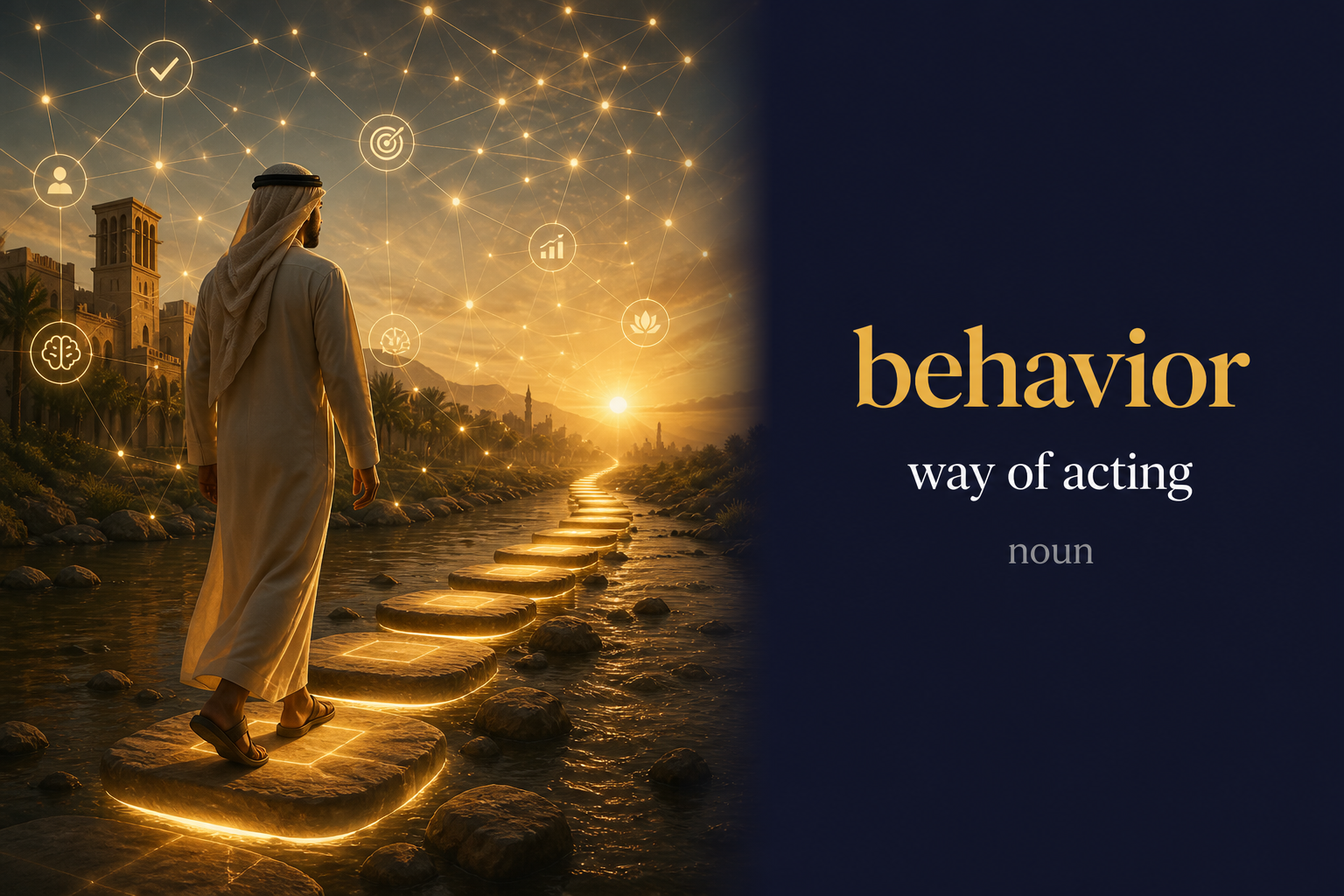
Meaning of Behavior
The way a person, animal, or system acts — observable conduct, habits, and responses in a given situation
ما معنى كلمة Behavior بالعربي؟
سلوك
🧭👁️ سلوك؛ طريقة التصرّف والاستجابة؛ أنماط أفعال ملحوظة في موقف معيّن 👁️🧭
قصة GL: علّم نايف أن behavior الصحيح في المصفوفات — انتظام لا بطولة يوماً واحداً — هو ما صنع ارتفاع HBDNF 88.77% بعد أشهر من التدريب 🌟
Behavior in a sentence
Counsel documents inventor behavior around disclosure dates to keep patent filings defensible.
GL labs track study behavior carefully so HBDNF gains can be linked to real matrix practice, not guesswork.
Genetic Invent coaches reward founder behavior that protects deep-tech focus during patent sprints.
In the 43-day protocol, small daily behavior shifts — short matrices, sleep, review — compound into clearer thinking.
Origin of Behavior
From behave + -ior/-our; ultimately related to Middle English 'behaven' (to conduct oneself). American English prefers behavior; British English often uses behaviour.
In the Genetic Learning (GL) context
In Genetic Learning led by Naif Talal Al-Essa, behavior is the measurable bridge between intention and brain change. Platforms do not praise vague motivation alone — they shape practice behavior so HBDNF evidence (+88.77%) rests on what learners actually do day after day.
Behavior audio micro-course (transcript)
Podcast 1 — Introduction & meaning
Narrator: Today's word is "behavior" — a noun, pronounced /bɪˈheɪvjə/, with the stress on "hay".
Narrator: Behavior means the way someone acts, their conduct, especially in response to specific situations.
Narrator: In plain English, behavior describes observable actions, how someone conducts themselves in daily life.
Narrator: It builds from "be" plus "have", an old sense of "have" meaning to hold or conduct oneself.
Narrator: This is the American spelling; British English traditionally spells it "behaviour", with the extra "u".
Narrator: Psychology and education rely heavily on "behavior", analysing patterns of action systematically.
Narrator: It differs from "personality" by focus — behavior is observable action, personality the underlying character traits.
Narrator: "Behavioral science" became a major academic field studying human and animal action patterns.
Narrator: So remember: behavior is conduct observed — actions, patterns, and responses, studied and described carefully.
Read podcasts 2 and 3
Podcast 2 — In conversation
Speaker A: I always see "behavior" spelled without the "u" in American texts, but "behaviour" with it in British ones. Which is actually correct?
Speaker B: Both are correct, just regionally different! BEHAVIOR, from "be" plus an old sense of "have" meaning to conduct oneself, is the American spelling. British English adds the extra "u", spelling it "behaviour", following the same pattern as "colour" and "favour".
Speaker A: So it's purely regional spelling convention, not a difference in meaning at all?
Speaker B: Exactly — pick whichever matches your target audience's regional spelling convention; the meaning stays entirely identical!
Speaker A: Example sentences?
Speaker B: "The teacher praised his good behavior"; "the study analysed consumer behavior"; "her behavior changed after the promotion" — school, research, and personal change.
Speaker A: Common mistakes?
Speaker B: Stay consistent throughout a document — don't mix "behavior" and "behaviour" spellings within the same piece of writing!
Speaker A: Close relatives?
Speaker B: "Conduct" the formal cousin, "actions" the plain general twin, "manner" for a specific style of behaving. Behavior keeps its universally studied importance!
Podcast 3 — Prompt engineering
Speaker B: Let's use "behavior" in AI prompts — essential for analytics apps tracking user actions and interaction patterns.
Speaker A: So behavior in a prompt often relates to user-analytics or interaction-tracking features?
Speaker B: Right. For a product-analytics tool, you'd write:
Prompt: Track user behavior across the app, showing which features get used most and where people drop off.
Speaker A: Good — what about a fraud-detection system?
Speaker B: The security prompt:
Prompt: Flag suspicious behavior automatically, like rapid repeated login attempts from different locations within minutes.
Speaker A: A parental-control app?
Speaker B: The monitoring prompt:
Prompt: Let parents review their child's app behavior weekly, showing screen time and which apps were used most.
Speaker A: One more?
Speaker B: The personalisation prompt:
Prompt: Personalise recommendations based on past behavior, prioritising content similar to what the user has engaged with before.
Speaker A: Behavior always signals a data-driven pattern worth tracking and analysing.
Speaker B: Exactly — say behavior, and the AI builds precise tracking logic.
Frequently asked questions about Behavior
What does Behavior mean?
The way a person, animal, or system acts — observable conduct, habits, and responses in a given situation
ما معنى كلمة Behavior بالعربي؟
سلوك — 🧭👁️ سلوك؛ طريقة التصرّف والاستجابة؛ أنماط أفعال ملحوظة في موقف معيّن 👁️🧭
How do you pronounce Behavior?
Behavior is pronounced /bɪˈheɪvjə/ and is used as a noun.
How is Behavior used in a sentence?
Counsel documents inventor behavior around disclosure dates to keep patent filings defensible.
What are synonyms of Behavior?
conduct, manner, demeanor, actions, habits, deportment.