C
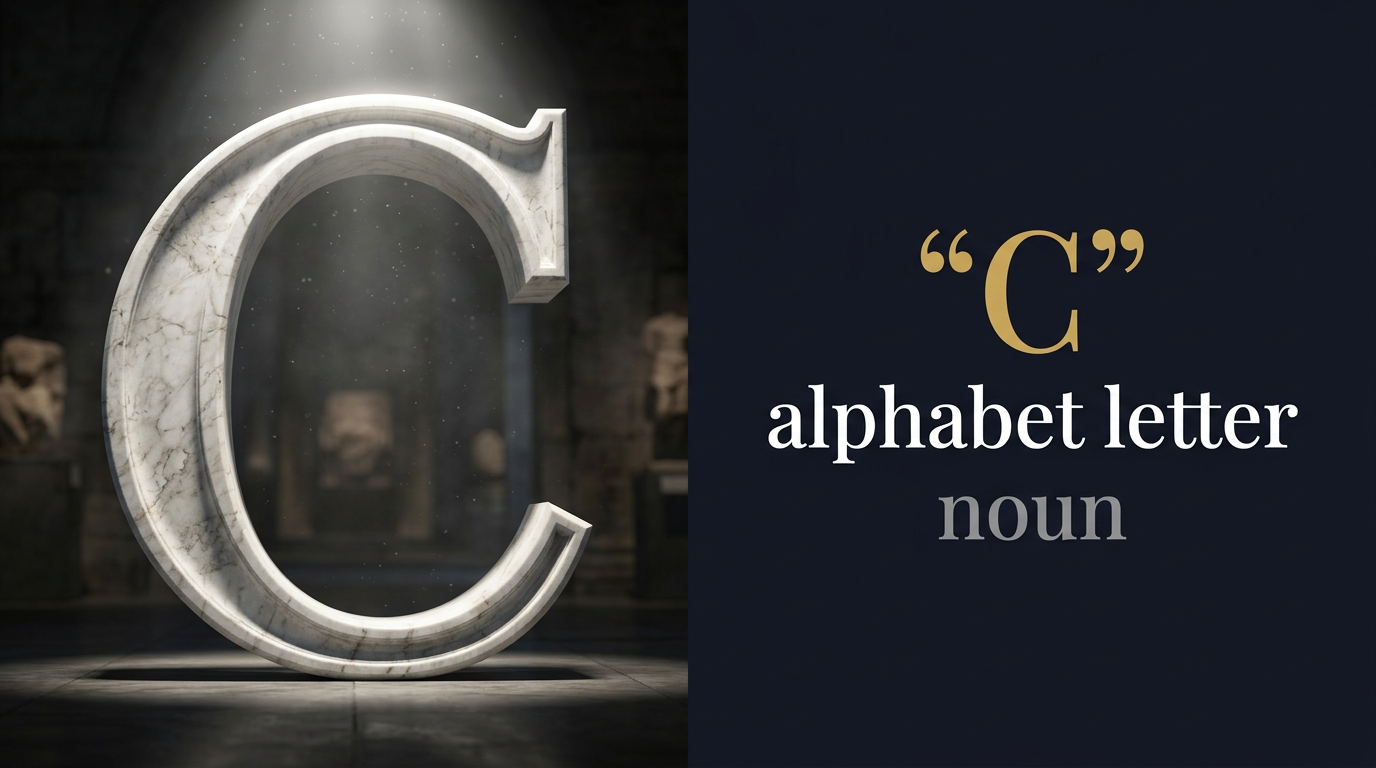
Meaning of C
Third letter; programming language; musical note; vitamin; grade; chemical symbol
ما معنى كلمة C بالعربي؟
الحرف الثالث باللاتينية ورمز متغير أو لغة برمجة أساسية
🅲📘 الحرف الثالث باللاتينية ورمز متغير أو لغة برمجة أساسية؛ دلالة معيارية؛ بنية تركيب 📘🅲
قصة GL: استعان فريق البحث بخوارزميات نمط C منخفضة المستوى لضبط زمن تنفيذ مصفوفات قياس HBNGF بموثوقية زمنية دقيقة ⏱️🎭
Synonyms & related words
C in a sentence
Innovation incubators utilize breakthrough thinking business C programming, implementing cognitive enhancement entrepreneurial computational solutions that enhance startup development through systematic entrepreneurial innovation programming protocols and C enhancement systems.
GL research utilizes neuroplasticity development C programming, implementing HBDNF optimization computational solutions that enhance cognitive enhancement scientific research through systematic breakthrough discovery programming protocols and C enhancement systems.
Patent law utilizes genetic learning technology C programming, implementing intellectual property computational solutions that enhance cognitive enhancement innovation through systematic legal programming protocols and C enhancement systems.
Matrix-based training programs utilize neuroplasticity development learning C programming, implementing cognitive enhancement educational computational solutions that enhance knowledge acquisition through systematic programming protocols throughout 43-day experiences.
Origin of C
From Latin letter 'C', representing various concepts across disciplines.
In the Genetic Learning (GL) context
In GL research and innovation contexts, C represents cognitive enhancement systematic implementation, neuroplasticity development computational foundation, and breakthrough thinking programming excellence for optimal implementation enhancement and systematic C optimization.
C audio micro-course (transcript)
Podcast 1 — Introduction & meaning
Narrator: Among the many achievements of twentieth-century computer science, few have shaped the digital world as profoundly as a programming language known simply by a single letter: C.
Narrator: Pronounced like the letter: see. Spelled simply C. It is a noun — the name of a general-purpose, procedural programming language, and one of the most influential ever created.
Narrator: C is a general-purpose programming language designed to give programmers efficient, low-level access to computer memory and hardware, while remaining readable and portable enough to write complex software. It produces fast, compact programs and compiles directly to machine code. For these reasons, operating systems, embedded systems, compilers, databases, and performance-critical applications have been written in C for more than fifty years.
Narrator: C was developed between 1969 and 1973 at Bell Laboratories by Dennis Ritchie. It grew from an earlier language called B, which itself descended from BCPL — Basic Combined Programming Language. Ritchie named his new language C simply because it was the successor to B — the next letter in the alphabet. The language was closely associated with the UNIX operating system, also developed at Bell Labs, and the two shaped each other through their development.
Narrator: In 1978, Ritchie and Brian Kernighan published The C Programming Language — a book so influential that it became simply known as K and R, and is still considered one of the finest technical books ever written. It defined the language for a generation of programmers.
Narrator: The language was standardised by the American National Standards Institute in 1989 — giving rise to ANSI C, sometimes called C89 — and later by the International Organisation for Standardisation, producing the C90, C99, C11, and C17 standards. Each revision added features while preserving the language's essential character: close to the machine, explicit, and precise.
Narrator: C spawned a family of languages. C++ extended it with object-oriented features. Java, C#, JavaScript, Go, and Rust all owe significant debt to C's syntax and philosophy. Understanding C remains foundational to understanding how modern computing works at its roots.
Narrator: One letter, one language, fifty years of foundations. C is the bedrock on which most of the digital world is built.
Read podcasts 2 and 3
Podcast 2 — In conversation
Speaker A: I have been asked to look at some legacy code at work and it is written in C. I have mostly used Python and JavaScript, so I want to make sure I understand what C actually is before I dive in.
Speaker B: Good instinct to establish the context first. C is a compiled, statically-typed, procedural language that gives you direct control over memory. That is very different from Python, which is interpreted, dynamically typed, and manages memory for you automatically.
Speaker A: So in C, you have to manage memory yourself — that is the famous manual memory allocation.
Speaker B: Exactly. In C, you use malloc to allocate memory on the heap and free to release it when you are finished. If you forget to free memory you have allocated, you get a memory leak. If you free the same block twice, or write past the end of an array, you get undefined behaviour — often a crash, sometimes much worse. That is why C requires more discipline than higher-level languages.
Speaker A: But in exchange you get performance.
Speaker B: Significant performance. C compiles to native machine code with minimal overhead. There is no virtual machine, no garbage collector pausing your program, no boxing and unboxing of values. When you write a for loop in C, it maps almost directly to the CPU instructions that execute it. That is why operating systems, databases, and real-time systems are still written in C.
Speaker A: What is the difference between C and C++?
Speaker B: C++ was designed by Bjarne Stroustrup in the early 1980s as "C with classes" — adding object-oriented programming features: classes, inheritance, polymorphism, templates, and later the standard template library. C++ is a superset of C in many respects, meaning most valid C code is also valid C++. But C remains a distinct language, valued for its simplicity, portability, and total absence of abstraction overhead.
Speaker A: And C versus C-sharp — the Microsoft language — those are completely separate?
Speaker B: Completely separate. C-sharp — written C hash — was designed by Anders Hejlsberg at Microsoft in the late 1990s, inspired by Java and C++. It runs on the .NET runtime with garbage collection and a rich standard library. The name uses the C prefix to signal its C family heritage, but C-sharp is as far from C itself as Java is. It is like saying a great-grandchild has the same name as an ancestor — related but very different.
Speaker A: So C, C++, C-sharp, and Objective-C are all distinct languages that share a name prefix.
Speaker B: Correct. The C family is large. And then there is C99, C11, C17 — those are standardised versions of the original C language itself, not different languages. They are editions of the same language updated by the ISO standards committee to add modern features while preserving backward compatibility.
Speaker A: That makes the naming much clearer. C the original, then its descendants named by convention.
Speaker B: And understanding C itself remains the most direct route to understanding how computers actually execute the code we write. Everything above it builds on what C established.
Podcast 3 — Prompt engineering
Speaker B: C in prompt engineering is primarily a systems programming and education context. When you ask AI to write, explain, debug, or teach C, the word does a large amount of disambiguation work — it tells the AI you want low-level, compiled, procedural code, not scripted or object-oriented approaches. Let us go through the most useful practical prompt patterns.
Speaker B: Starting with a C programming tutorial generator.
Create an interactive tutorial page for learning C programming. The tutorial covers: variables and data types in C — int, char, float, double — pointers and memory addresses, dynamic memory allocation with malloc and free, and basic file I/O with fopen and fclose. Each section has a brief explanation beside a code example in a syntax-highlighted block. Include a warning panel beside each section that covers the most common mistake for that topic.
Speaker B: Naming the exact C data types — int, char, float, double — and the exact functions — malloc, free, fopen, fclose — is critical. It prevents the AI from producing generic programming content and ensures it generates accurate C-specific material. Warning panel beside each section is a layout specification that pairs the learning content with the safety information on the same screen rather than relegating warnings to footnotes.
Speaker A: The beside layout for code plus warning means a student sees the correct pattern and the common mistake simultaneously — which is exactly how experienced C developers think.
Speaker B: Teaching through contrast. Now a C function documentation system.
Build a C function reference documentation page for an embedded systems team. Each function entry shows: function signature with return type and parameter types, a plain-English description, the header file it requires, a minimal working C code example, return value description, and known limitations or undefined behaviour risks. Display the code example beside the parameter table so developers can cross-reference signature and usage simultaneously.
Speaker B: Undefined behaviour risks is a C-specific documentation field that no other language needs in quite the same way. In C, certain operations — null pointer dereference, signed integer overflow, out-of-bounds array access — produce undefined behaviour: the compiler can do anything, including generating code that appears correct in debug builds and crashes in release. Documenting these risks explicitly is real C engineering practice.
Speaker A: Code example beside the parameter table is a two-column layout that lets the developer read the signature and see its usage in context without scrolling between sections.
Speaker B: One beside, complete cross-reference. Now a C code learning platform database.
Design a PostgreSQL schema for a C programming learning platform. Tables: lessons with id, title, c_standard — values C89 C99 C11 C17 — topic, difficulty, and content_markdown; code_exercises with id, lesson_id, starter_code, expected_output, test_inputs, and hints_json; user_submissions with id, user_id, exercise_id, submitted_code, compile_result — pass or fail — compiler_output, and submitted_at. Index user_submissions on user_id and exercise_id for efficient per-user progress queries.
Speaker B: The c_standard column with four valid values — C89, C99, C11, C17 — is a real pedagogical distinction. A C89 lesson should not use features from C99 such as variable-length arrays or the restrict keyword. Storing the standard version enables the platform to validate that exercises match the version being taught. Compiler_output as a stored field means students can review exactly what the compiler said, not just pass or fail.
Speaker A: Hints_json as a field is a neat design — it lets a single exercise carry multiple progressive hints as a JSON array without needing a separate hints table for a many-to-one relationship.
Speaker B: JSON fields for structured but variable-length data. Now a memory safety analyser UI.
Build a static analysis results dashboard for a C codebase. The tool reports: memory leaks — malloc without matching free — buffer overflows — array writes past bounds — null pointer dereferences, and use-after-free errors. Each issue shows: filename, line number, issue category, severity from 1 to 5, and a code snippet of the surrounding three lines. Display a severity heatmap by file beside a filterable issue list so developers can identify the most problematic files at a glance.
Speaker B: The four issue categories — memory leak, buffer overflow, null pointer dereference, use-after-free — are the canonical categories of C memory safety problems recognised by tools like Valgrind, AddressSanitizer, and Coverity. Naming them produces a taxonomy-aware dashboard rather than generic error cards. Severity heatmap by file beside a filterable issue list is a split-panel analytical layout: strategic view on the left, operational detail on the right.
Speaker A: Use-after-free is particularly subtle — you might free a memory block and then accidentally read from it later when that memory has been reallocated for something else. It is a genuine security vulnerability class, not just a bug.
Speaker B: Many CVEs trace back to use-after-free in C code. The dashboard naming it explicitly tells the AI it is a first-class category. Now a C compiler integration tool.
Create a browser-based C code compiler and runner tool. The user types C code in a left panel. On clicking Compile and Run, the code is sent to a backend API that compiles it with GCC using the C11 standard flag — flag dash std equals c11 — and returns stdout output, stderr compiler errors, and exit code. Display compiler errors in a red panel beside the code editor with line number annotations that highlight the corresponding line in the editor. Enforce a 5-second execution timeout and a 512-kilobyte output limit.
Speaker B: The GCC flag — -std=c11 — is exact compiler syntax that tells the AI to generate accurate invocation code rather than a vague compile this C code instruction. The 5-second timeout and 512-kilobyte output limit are real sandboxing requirements for any public code execution service — without them, a user could submit an infinite loop or a program that fills disk. Red panel beside the code editor with line annotations is a split-panel IDE pattern that mirrors professional tools like VS Code.
Speaker A: Line number annotations that highlight the corresponding line is a specific UI interaction — clicking an error jumps the editor cursor to the problematic line. That is standard IDE behaviour but requires explicit specification to generate.
Speaker B: Specify the interaction, get the interaction. Final prompt — C learning progress tracker.
Build a learning progress dashboard for students studying C programming. Track completion of topics: pointers, arrays, strings, structs, file I/O, dynamic memory, and standard library functions. Each topic shows a progress bar beside a count of completed exercises versus total. Highlight topics with less than 50 percent completion in amber. Display a recommended next topic card at the top based on the lowest completion percentage. The dashboard must use only vanilla JavaScript and CSS custom properties with no external dependencies.
Speaker B: The specific C topic list — pointers, arrays, strings, structs, file I/O, dynamic memory, standard library — reflects the actual C curriculum that textbooks and university courses use. It produces a domain-accurate progress structure rather than generic module names. Recommended next topic card based on lowest completion is a concrete algorithmic specification: find the minimum, display it. Without that specification, the AI might generate a static hard-coded recommendation.
Speaker A: And vanilla JavaScript with no external dependencies is critical for a C learning tool — using a JavaScript framework to teach a systems language would be slightly ironic.
Speaker B: There is a neat symmetry to it. C is valued for its absence of abstraction layers; a C learning tool built without framework dependencies honours that same philosophy. The word C — single letter, total precision — produces exactly the programming context you need every time you use it in a prompt.
Frequently asked questions about C
What does C mean?
Third letter; programming language; musical note; vitamin; grade; chemical symbol
ما معنى كلمة C بالعربي؟
الحرف الثالث باللاتينية ورمز متغير أو لغة برمجة أساسية — 🅲📘 الحرف الثالث باللاتينية ورمز متغير أو لغة برمجة أساسية؛ دلالة معيارية؛ بنية تركيب 📘🅲
How do you pronounce C?
C is pronounced /si/ and is used as a noun.
How is C used in a sentence?
Innovation incubators utilize breakthrough thinking business C programming, implementing cognitive enhancement entrepreneurial computational solutions that enhance startup development through systematic entrepreneurial innovation programming protocols and C enhancement systems.
What are synonyms of C?
third letter, programming language, musical note, vitamin.