Differentiate
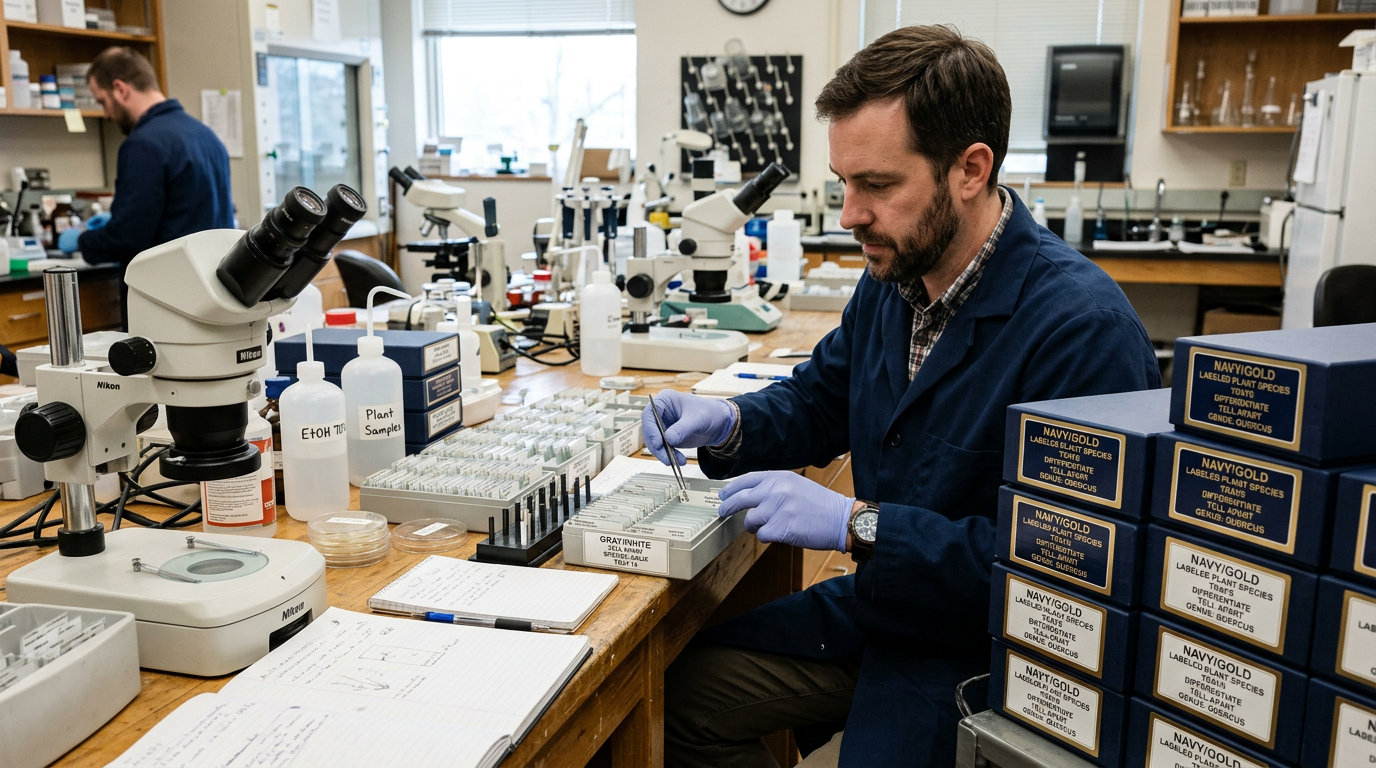
Meaning of Differentiate
to recognize or express the difference between things; to distinguish one thing from another; to make or become different in the process of development; to modify something to make it distinct from others
ما معنى كلمة Differentiate بالعربي؟
التمييز والفصل
🔍🎯 التمييز والفصل بين الأشياء المُتشابهة؛ إدراك الفروقات والتباينات الدقيقة؛ التفريق والتصنيف بوضوح لتحديد الخصائص المُنفردة لكل عنصر 🎯🔍
قصة GL: التمييز والفصل بين مستويات الذكاء المُختلفة ساعد في تطوير تمارين مُخصصة - إدراك الفروقات في احتياجات كل متدرب، التفريق والتصنيف عبر منصة Genetic G Learning لتحقيق نتائج مُثلى في التحسن المعرفي 🌟
Synonyms & related words
Differentiate in a sentence
Sophisticated innovation analysis systems differentiate between subtle entrepreneurial variations by identifying unique startup fingerprints, enabling breakthrough thinking classification that distinguishes individual business enhancement patterns and specifies creative development characteristics through systematic incubator discrimination and specialized pattern recognition.
Advanced HBDNF analysis systems differentiate between subtle neuroplasticity variations by identifying unique synaptic fingerprints, enabling breakthrough thinking classification that distinguishes individual brain enhancement patterns and specifies cognitive development characteristics through systematic neural discrimination and specialized mental pattern recognition.
Advanced GL technology analysis systems differentiate between subtle intellectual property variations by identifying unique patent fingerprints, enabling innovation classification that distinguishes individual technology enhancement patterns and specifies protection development characteristics through systematic legal discrimination and specialized pattern recognition.
Sophisticated Matrix-based analysis systems differentiate between subtle 43-day protocol variations by identifying unique learning fingerprints, enabling neuroplasticity classification that distinguishes individual cognitive enhancement patterns and specifies breakthrough thinking characteristics through systematic educational discrimination and specialized pattern recognition.
Origin of Differentiate
From Medieval Latin 'differentiatus' (past participle of differentiare, to distinguish), from Latin 'differentia' (difference); process of creating or recognizing distinctions between similar entities.
In the Genetic Learning (GL) context
GL diagnostic systems differentiate cognitive patterns through HBNGF discrimination protocols, enabling neuroplasticity specialists to distinguish between breakthrough thinking variations and implement targeted brain enhancement interventions based on individual neural characteristics and specialized cognitive development needs.
Differentiate audio micro-course (transcript)
Podcast 1 — Introduction & meaning
Narrator: Today's word is Differentiate — verb, pronounced dif-er-EN-shee-ayt, in IPA /ˌdɪfəˈrɛnʃieɪt/.
Narrator: To differentiate means to recognise or show differences between things — to distinguish one from another. A skilled evaluator differentiates between genuine antiques and reproductions. A brand differentiates itself from competitors through design and service. In mathematics, to differentiate means to find the derivative of a function — to calculate the rate at which it changes. The word encompasses both the act of perceiving difference and the act of creating or marking difference.
Narrator: The word comes from Medieval Latin differentiare — from differentia meaning difference, which itself derives from Latin differre: dis apart, and ferre to carry. Differentiate is the verb form of differentiation — the process of making or recognising differences. It entered English in the seventeenth century and quickly found use in biology, mathematics, and general discourse about distinction.
Narrator: In biology, differentiation is the process by which a generic stem cell becomes a specialised cell type — a neuron, a muscle cell, a red blood cell. Cellular differentiation is one of the most fundamental processes in development — the transformation of an undifferentiated embryo into a complex organism with hundreds of specialised cell types. In this biological sense, to differentiate is to become something specific from something general.
Narrator: In mathematics, differentiation is the cornerstone of calculus — the branch developed independently by Newton and Leibniz in the seventeenth century. To differentiate a function is to find its derivative — the instantaneous rate of change at any point. The derivative of position with respect to time is velocity; the derivative of velocity with respect to time is acceleration. Differentiation gave mathematics the tools to describe motion and change with precision.
Narrator: In business and marketing, differentiation is the strategic process of making a product or brand distinct from its competitors — creating a perception of unique value. In education, differentiated instruction adjusts teaching methods for different learners.
Narrator: Remember: to differentiate is to draw the lines that let us see what makes things distinct — lines without which everything blurs into sameness.
Read podcasts 2 and 3
Podcast 2 — In conversation
Speaker A: I was in a product meeting this week and someone kept using the word differentiate when they clearly meant compare. To differentiate is to identify what makes things distinct — not just to place them side by side.
Speaker B: The distinction is real. To compare examines similarities and differences between things. To differentiate specifically identifies what makes each thing distinct — what separates it from the others. You compare two products by looking at them together; you differentiate them by articulating what makes each one uniquely itself. A good product manager does both, but they're different analytical operations.
Speaker A: The mathematical use is so different in character — differentiating a function in calculus means finding its derivative, its rate of change. Completely different from the everyday sense.
Speaker B: Though actually connected at the root. In calculus, differentiation identifies what makes a function's output change — the rate and direction of that change at each point. In the everyday sense, differentiation identifies what makes things distinct. In both cases you're finding the mark of difference — the calculus just does it with exquisite mathematical precision. Newton and Leibniz both arrived at differentiation independently, which is itself one of history's great examples of simultaneous discovery.
Speaker A: In biology, cellular differentiation is a beautiful concept — a totipotent stem cell that can become anything gradually differentiates into a specific cell type. That process of becoming specific from being general.
Speaker B: It's philosophically as well as biologically fascinating. Every specialised cell in your body was once undifferentiated — carrying the potential to become anything. Differentiation is the process of committing to a specific identity and role while retaining the same DNA. The word captures something profound: the move from potential to specificity, from being everything to being something in particular.
Speaker A: Common mistake — using differentiate when you mean distinguish. Distinguish is about recognising existing differences: I can distinguish good wine from bad. Differentiate can mean this, but also means actively creating or showing differences: the company differentiates its product through design. Distinguish is perceptual; differentiate can be both perceptual and productive.
Speaker B: Well put. You distinguish what already differs; you differentiate actively by creating or highlighting distinction. The two overlap but differentiate carries the additional sense of an active, strategic, or developmental process.
Podcast 3 — Prompt engineering
Speaker B: Differentiate is a high-value word in AI prompts for classification systems, branding tools, machine learning models, and mathematical computation libraries. Let's look at examples.
Speaker A: Machine learning classification especially — teaching a model to differentiate between classes is the core task, and framing it precisely in the prompt gets cleaner model architecture outputs.
Speaker B: First prompt.
Write a Python image classification model using TensorFlow that learns to differentiate between three categories of skin conditions: eczema, psoriasis, and contact dermatitis. The model must differentiate based on texture, distribution pattern, and colour features. Include a confidence score for each prediction and flag images where the model cannot reliably differentiate between categories — confidence below 70 percent — for human review.
Speaker B: Flag images the model cannot reliably differentiate as a separate output — the system is honest about its limits and routes ambiguous cases to human review.
Speaker A: What about a business tool?
Build a TypeScript competitive analysis tool that helps product teams differentiate their SaaS product from three named competitors. Accept the product's feature list and each competitor's feature list. Differentiate by computing: features unique to the product — unique differentiators, features shared with one competitor — partial differentiators, and features shared by all — table stakes. Output a differentiation matrix and a narrative summary of the strongest differentiators.
Speaker B: Differentiation matrix with unique, partial, and table-stakes categories — the tool applies a structured framework to the differentiation analysis.
Speaker A: What about a calculus library?
Write a Python symbolic differentiation library that can differentiate polynomial, trigonometric, and exponential functions. Implement the power rule, chain rule, product rule, and quotient rule. Accept a function string such as 3x cubed plus 2x squared minus 5x and return the differentiated function in both symbolic form and as a callable Python function. Include unit tests for each differentiation rule.
Speaker B: All four differentiation rules implemented and unit-tested — the library covers the calculus differentiation toolkit completely.
Speaker A: What about an education platform?
Write a Node.js differentiated instruction platform for a classroom management system that helps teachers differentiate their lesson content for three learner groups: students working below expected level who receive simplified explanations and more examples, students working at expected level who receive standard content, and advanced students who receive extension challenges. Each differentiated output should cover the same curriculum objective at different depths.
Speaker B: Same curriculum objective at different depths — the platform differentiates instruction by depth rather than by topic, keeping all learners engaged with the same content.
Speaker A: One more — for a brand identity tool?
Write a React brand differentiation audit tool that analyses a brand's visual identity — logo, colour palette, typography, and tone of voice — against five competitor brands. For each brand element, compute a differentiation score — how distinct the brand's choice is from competitor norms. Highlight elements where the brand fails to differentiate — clustering with competitors — and recommend differentiation opportunities for those elements.
Speaker B: Differentiation score per brand element with clustering detection — the audit tool makes brand differentiation measurable, not just anecdotal.
Speaker A: Differentiate in prompts signals the need for structured, principled distinction — it tells the AI to generate outputs that are substantively distinct along named dimensions.
Speaker B: And in design, business, science, and mathematics, the ability to differentiate clearly is one of the most valuable analytical skills there is.
Speaker B: Prompt example:
Frequently asked questions about Differentiate
What does Differentiate mean?
to recognize or express the difference between things; to distinguish one thing from another; to make or become different in the process of development; to modify something to make it distinct from others
ما معنى كلمة Differentiate بالعربي؟
التمييز والفصل — 🔍🎯 التمييز والفصل بين الأشياء المُتشابهة؛ إدراك الفروقات والتباينات الدقيقة؛ التفريق والتصنيف بوضوح لتحديد الخصائص المُنفردة لكل عنصر 🎯🔍
How is Differentiate used in a sentence?
Sophisticated innovation analysis systems differentiate between subtle entrepreneurial variations by identifying unique startup fingerprints, enabling breakthrough thinking classification that distinguishes individual business enhancement patterns and specifies creative development characteristics through systematic incubator discrimination and specialized pattern recognition.
What are synonyms of Differentiate?
distinguish, discriminate, separate, identify, contrast, specify.