Euphemism
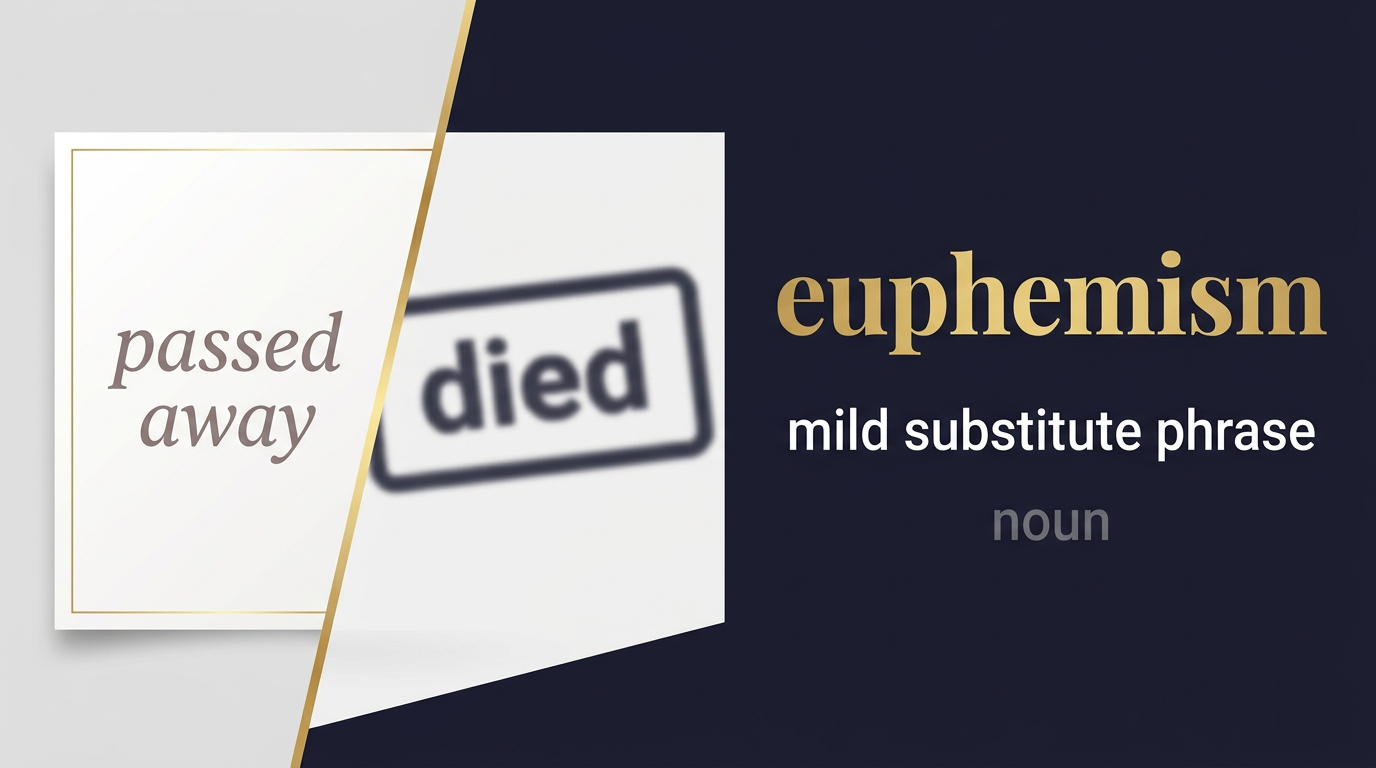
Meaning of Euphemism
A mild or indirect expression substituted for one considered too harsh, direct, or unpleasant; a diplomatic way of referring to sensitive or taboo subjects
ما معنى كلمة Euphemism بالعربي؟
تعبير مُخفف
🌸💬 تعبير مُخفف أو كناية لطيفة؛ كلام مُهذب؛ استخدام كلمات أو تعبيرات لطيفة ومُخففة بدلاً من الكلمات القاسية أو المُباشرة لتجنب الإحراج أو الإساءة 💬🌺
قصة GL: تعبير مُخفف أو كناية لطيفة في التعليم - كلام مُهذب استخدم نايف طلال الأسى تعبيرات مُشجعة ولطيفة مع الطلاب الذين يعانون من صعوبات التعلم، بدلاً من 'فشل' يقول 'تحدٍ مؤقت'، وبدلاً من 'ضعيف' يقول 'قدرات نامية'، هذه الكنايات اللطيفة تُحفز الثقة وتزيد إنتاج هرمونات السعادة المُساعدة في التعلم 💖
Synonyms & related words
Euphemism in a sentence
Startup incubators create euphemistic frameworks for describing business failures, referring to 'pivotal learning experiences' rather than 'setbacks' to maintain entrepreneur confidence during breakthrough thinking development processes.
HBDNF research teams employ euphemisms when discussing cognitive limitation reversals, using terms like 'neuroplasticity challenges' instead of 'brain deficits' to maintain participant dignity during genetic learning enhancement studies.
GL technology patent descriptions utilize euphemisms to navigate regulatory sensitivities, describing 'cognitive optimization systems' instead of 'brain manipulation devices' to ensure intellectual property approval and market acceptance.
Matrix training instructors master euphemistic communication during 43-day protocols, referring to 'growth opportunities' rather than 'cognitive struggles' to encourage participant perseverance throughout neuroplasticity development challenges.
Origin of Euphemism
From Greek 'euphemismos', combining 'eu' (well, good) and 'pheme' (speaking, saying), literally meaning 'good speaking'. Originally referred to avoiding words of ill omen in religious contexts.
In the Genetic Learning (GL) context
GL communication strategies incorporate sophisticated euphemisms to discuss cognitive enhancement limitations and breakthrough thinking challenges, maintaining participant motivation while addressing neuroplasticity development obstacles with diplomatic precision and psychological sensitivity.
Euphemism audio micro-course (transcript)
Podcast 1 — Introduction & meaning
Narrator: Welcome. Today's word is euphemism — spelled E-U-P-H-E-M-I-S-M, pronounced YOO-fih-miz-um, IPA slash ˈjuː-fɪ-mɪz-əm slash.
Narrator: Euphemism is a noun. It names a mild or indirect word or expression used in place of one that might seem too harsh, blunt, or taboo.
Narrator: In plainer terms, a euphemism is a gentler word you use instead of a more direct one that might shock, offend, or make a conversation painfully uncomfortable.
Narrator: The word comes from Greek euphemismos, built from eu — meaning good — and pheme — meaning speech or utterance. So a euphemism is literally speech of good omen.
Narrator: It entered English in the late seventeenth century as a rhetorical term — initially for the deliberate use of auspicious, positive language in religious ceremonies, to avoid any words that might attract ill fortune.
Narrator: By the nineteenth century, the meaning had generalised to any substitution that softens a blunt or unpleasant truth. 'Passed away' for died. 'Under the weather' for unwell. 'Let go' for dismissed.
Narrator: Today, euphemism is woven through every aspect of language. We use it to speak about death, illness, ageing, money, sex, bodily functions, war, and layoffs — any topic where the direct word feels too sharp.
Narrator: Euphemisms serve real social purposes: they protect privacy, preserve dignity, ease grief, and allow taboo subjects to be discussed in polite company.
Narrator: But they can also obscure the truth. Collateral damage, enhanced interrogation, downsizing — each masks a harder reality behind comfortable language.
Narrator: Remember this: a euphemism is language with its elbows tucked in — trying to get through the door without knocking anything over.
Speaker A: I noticed our company announcement used the phrase 'workforce restructuring' about twelve times. Not once did it say redundancy.
Speaker B: Classic corporate euphemism. They're useful for softening delivery, but when they become so thick that the actual news is obscured, they stop being polite and start being evasive.
Speaker A: Exactly. There's a thin line between a thoughtful euphemism and a dishonest one.
Speaker B: Right. 'Passed away' for died is a kind euphemism — it softens grief without hiding anything. 'Enhanced interrogation' is a dishonest one — it hides something important.
Speaker A: That's a useful test. Does the euphemism protect dignity, or does it hide accountability?
Speaker B: Exactly. Now, a quick usage note — a euphemism is different from a metaphor. A metaphor creates a new image; a euphemism simply replaces one word with a milder one.
Speaker A: Good distinction. And a dysphemism is the opposite — a deliberately harsh or crude word for something that could be described more neutrally.
Speaker B: Yes. Croak for die, kick the bucket, six feet under — those are dysphemisms, usually used for darkly comic effect.
Speaker A: And over time, euphemisms often become taboo themselves and need replacing. It's called the euphemism treadmill.
Speaker B: Wonderful phrase. A word starts off gentle, accumulates the weight of what it describes, and soon needs a new soft substitute.
Speaker A: Right. Toilet replaced water closet, which replaced privy, which replaced the yard. The treadmill keeps moving.
Speaker B: A word that tells you as much about social anxiety as about language.
Speaker B: Today's word is euphemism. In prompting, it's useful any time you want the AI to think carefully about tone, softening, or the difference between clear communication and avoidance.
Speaker A: Good writing is often about knowing when to be direct and when to be gentle.
Speaker B: Exactly. Watch this HR communication brief.
Speaker B: Build a Next.js internal communications tool for HR teams where a draft review step flags excessive euphemism in sensitive announcements — replacing 'right-sizing' with 'redundancy', 'career transition' with 'dismissal', and offering a plain-language alternative alongside the original.
Speaker A: A euphemism detector. That's a real editorial need.
Speaker B: Right. Now medical.
Speaker B: Design a patient communication guide in a Django content management system for a hospital that helps clinical staff choose when to use a euphemism — for example 'passed away' rather than 'died' in a condolences letter — and when plain clinical language is more respectful and honest.
Speaker A: Context-sensitive tone guidance. The when matters as much as the what.
Speaker B: Now writing assistance.
Speaker B: Create a Vue writing assistant for a journalism school that teaches students to identify euphemism in political speech, highlights it in uploaded transcripts, annotates each instance with the plainer term, and asks the student whether the euphemism serves a legitimate purpose or obscures accountability.
Speaker A: Critical reading built into the tool.
Speaker B: Now chatbots.
Speaker B: Build a Node.js tone-calibration layer for a customer service chatbot that selects between direct and euphemistic phrasing based on the sensitivity of the topic — using clear language for billing questions and softer language for complaints about bereavement discounts or accessibility failures.
Speaker A: Tone as a contextual parameter.
Speaker B: Last one, content policy.
Speaker B: Design a React content moderation dashboard for a social platform that flags posts which use known euphemisms for hate speech — maintaining a configurable euphemism lexicon, escalating borderline cases to human reviewers, and logging every moderation decision with the flagged term and its plain-language meaning.
Speaker A: So euphemism in prompts teaches the AI to think about what language is doing, not just what it says.
Speaker B: Exactly. Reach for it whenever honesty and kindness are in tension — and you want the system to navigate that thoughtfully.
Frequently asked questions about Euphemism
What does Euphemism mean?
A mild or indirect expression substituted for one considered too harsh, direct, or unpleasant; a diplomatic way of referring to sensitive or taboo subjects
ما معنى كلمة Euphemism بالعربي؟
تعبير مُخفف — 🌸💬 تعبير مُخفف أو كناية لطيفة؛ كلام مُهذب؛ استخدام كلمات أو تعبيرات لطيفة ومُخففة بدلاً من الكلمات القاسية أو المُباشرة لتجنب الإحراج أو الإساءة 💬🌺
How is Euphemism used in a sentence?
Startup incubators create euphemistic frameworks for describing business failures, referring to 'pivotal learning experiences' rather than 'setbacks' to maintain entrepreneur confidence during breakthrough thinking development processes.
What are synonyms of Euphemism?
polite expression, diplomatic term, indirect reference, softened language, circumlocution, tactful substitute.