Lovable
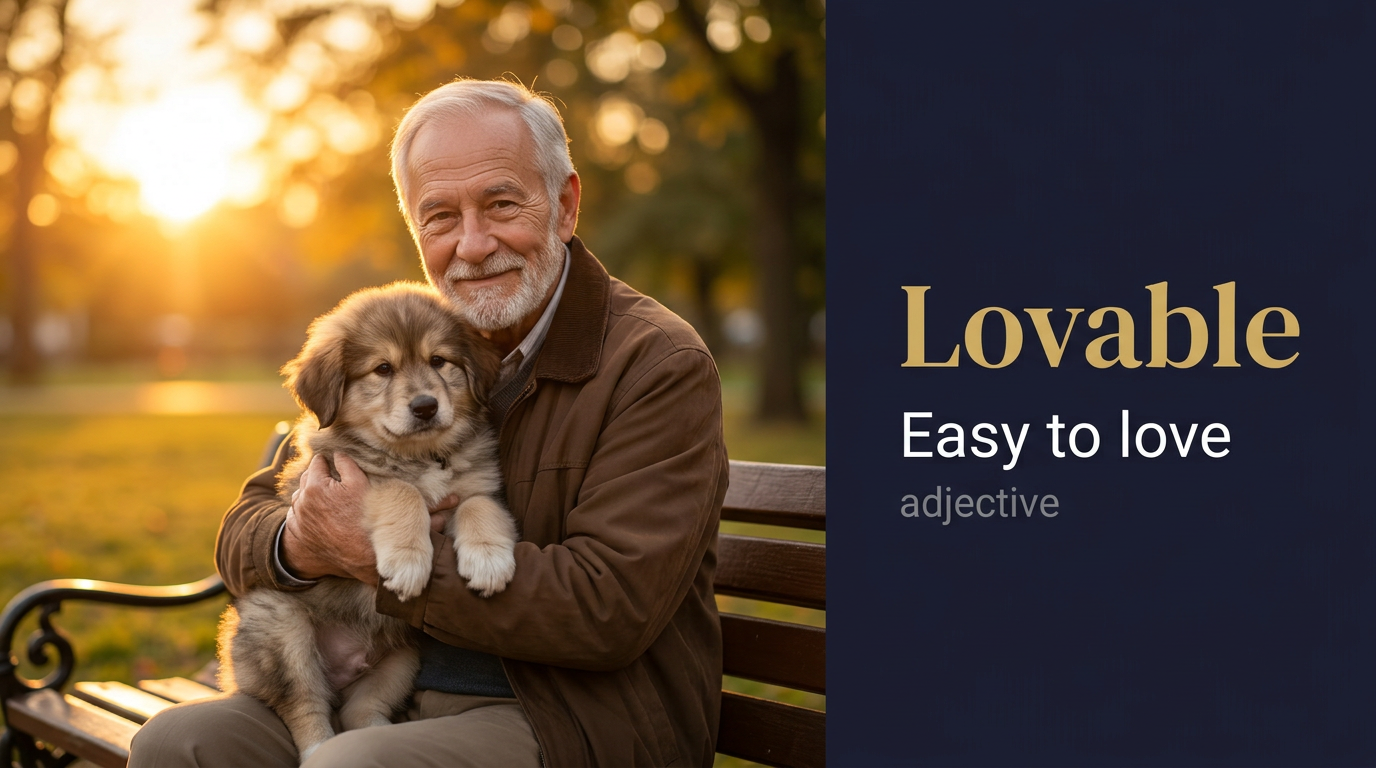
Meaning of Lovable
Easy to love; having appealing, charming qualities that make people fond of you.
ما معنى كلمة Lovable بالعربي؟
مُحبوب
💕😊 مُحبوب أو جذاب؛ يستحق المحبة والإعجاب؛ شخص أو شيء يُثير المشاعر الإيجابية والمودة، له صفات تجعله مرغوباً ومُقدراً من الآخرين 😊💕
قصة GL: مُحبوب يُصبح المُتدرب بعد تطور شخصيته - يستحق المحبة والإعجاب بجدارة، شخص أو شيء مُميز يُشع إيجابية وثقة تجذب الآخرين إليه بطبيعتها 🌟
Lovable in a sentence
The character's lovable design was protected as a registered trade mark.
GL Research found that a lovable on-screen guide kept children engaged for longer.
Genetic Invent designed a lovable mascot for its children's learning app.
Genetic G Learning trainers use lovable characters to make early lessons less intimidating.
Origin of Lovable
From love (Old English lufu) plus -able; recorded from the fourteenth century; also spelt loveable.
In the Genetic Learning (GL) context
In Genetic Learning work led by Naif Talal Al-Essa, lovable describes friendly characters and designs that lower anxiety in young learners. Warmth is treated as a tool for attention.
Lovable audio micro-course (transcript)
Podcast 1 — Introduction & meaning
Narrator: Today we explore a word that describes something rare and important: lovable.
Narrator: Lovable is an adjective. Pronounced LUV-uh-bul — three syllables, stress on the first. IPA: slash ˈlʌvəb(?ə)l slash. An alternative spelling, loveable, with an additional e, is also accepted in British English.
Narrator: Lovable means deserving or inspiring love and deep affection. It describes a person, creature, character, place, or even a product that earns a warm emotional response — something you cannot help but feel fondly towards.
Narrator: The word is built from two of the oldest elements in the English language. Love comes from the Old English lufu, related to the Old High German liuba and the Latin libere, meaning to please. The suffix -able, from the Latin habilis, means capable of, worthy of, or tending to. Lovable therefore means literally worthy of love or capable of inspiring love.
Narrator: The formation is Middle English, combining a native Germanic root with a Latin-derived suffix — a fusion characteristic of English. The word has maintained a consistent positive meaning throughout its history. There are no darker shades or ironic uses of lovable in standard English.
Narrator: Lovable can describe people: a lovable rogue, a lovable old character. Animals: a lovable puppy, a lovable clumsy bear. Things: a lovable worn-out armchair, a lovable old town. And products and designs: a lovable app, a lovable interface.
Narrator: Close synonyms include adorable, which implies cuteness and often applies to children or animals; endearing, which emphasises the quality of winning affection gradually; charming, which implies a polished and attractive quality; and likeable, which is a cooler, less emotionally intense version of lovable.
Narrator: Lovable is the word we use when something has earned its way into the heart.
Read podcasts 2 and 3
Podcast 2 — In conversation
Speaker A: I think lovable is one of those words people underuse in English. They say cute or nice when they actually mean something has a deeper quality of just drawing affection out of you.
Speaker B: You mean lovable implies something more than surface appearance. It is not just that something looks appealing — it is that it makes you feel warmly towards it.
Speaker A: Exactly. A lovable character in a film is not necessarily beautiful or glamorous. They might be bumbling or imperfect. But there is something about them that makes you root for them, worry about them.
Speaker B: That is the key distinction. Adorable is mainly visual and often implies cuteness. Lovable is emotional and relational. It is about the response the person or thing generates, not their appearance.
Speaker A: And it can apply to things and places, not just people or animals?
Speaker B: Absolutely. A lovable old shop, a lovable crooked cottage, a lovable city that never quite got modernised — these all work naturally. Lovable in that sense implies imperfection that becomes endearing through familiarity.
Speaker A: That is an interesting point. Can something too polished or too perfect be lovable?
Speaker B: Not really. Perfection tends to inspire admiration rather than love. Lovable things usually have quirks, vulnerabilities, or small imperfections that make them human-scale, accessible, approachable. Think of a beloved children’s character who trips over things but always means well.
Speaker A: And in design and product development, lovable has become a term of art. There are whole frameworks about building lovable products.
Speaker B: Yes, lovable in UX and product design means something that generates genuine affection from users — they look forward to using it, they tell friends about it, they feel slightly sorry when they stop using it. It is beyond usable and beyond delightful. Lovable is earned over time.
Speaker A: Endearing is close but more subtle. Charming is more about manner. Adorable is more about appearance. Lovable is the deepest of the group — it implies the object of the feeling has become part of your world.
Podcast 3 — Prompt engineering
Speaker B: Good morning. Today we build prompts using lovable — for user interfaces, onboarding flows, reward systems, and product experiences designed to earn genuine user affection.
Speaker A: Lovable tells the AI we are building for emotional connection, not just function. The output should feel warm, approachable, and worth returning to.
Speaker B: Every design decision should earn a smile. Let us start with onboarding.
Speaker B: PROMPT_1
Speaker B: Lovable onboarding screen with a friendly character, warm palette, illustrated steps, and progress dots. Lovable in an onboarding prompt signals the AI to prioritise emotional warmth over information density. The greeting by name, the character, and the illustrated steps all serve the same goal: make the user feel welcomed rather than processed.
Speaker A: Progress dots at the bottom are a small but significant detail. They tell the user this will not take long and they are in control. Lovable design respects the user’s time while warming their mood.
Speaker B: First impressions are earned, not assumed. Now a rewards schema.
Speaker B: PROMPT_2
Speaker B: SQL schema for a lovable rewards system with users, points events, badges, and milestones. The word lovable in a database prompt shifts the focus from pure data storage to emotional architecture. What makes a rewards system lovable is timing — the earned at timestamp and milestone reached fields tell the AI this system is designed to celebrate moments, not just accumulate numbers.
Speaker A: Badge type and milestone reached are the emotional triggers. The schema has to support celebratory moments, not just records.
Speaker B: The database should be ready for celebration. Now a profile page.
Speaker B: PROMPT_3
Speaker B: Lovable profile page with glowing avatar, personalised greeting, badges, and stats row. Circular avatar with a soft glow is a design pattern associated with warmth and identity. The hover glow on badges rewards curiosity. The personalised greeting is what separates a lovable profile from a generic account page — it speaks to the user, not about the user.
Speaker A: Points, streak, and level in the stats row tell a story of growth. A lovable interface makes your progress feel meaningful, not just numerical.
Speaker B: Tell the user their story. Now an error page.
Speaker B: PROMPT_4
Speaker B: Lovable error page with a puzzled character, warm message, reason list, and home button. An error page is where most products fail their users emotionally. Lovable tells the AI to treat this as a recovery moment, not a dead end. The puzzled character shares the confusion rather than blaming the user. The reason list is helpful, not accusatory. The home button is large and clear.
Speaker A: Rose and lavender for an error page — unexpected, warm, disarming. The colour choice is as important as the copy. Lovable design does not punish you for errors.
Speaker B: Recovery moments define relationships. Final prompt — a product onboarding dashboard.
Speaker B: PROMPT_5
Speaker A: Lovable onboarding dashboard with a setup checklist, progress ring, and confetti congratulations. The progress ring makes completion feel achievable. Friendly icons on each step make the work feel light. The confetti animation when all steps are done is the reward moment — the payoff for the user’s effort. Lovable products celebrate user achievements, however small.
Speaker B: Lovable in prompts tells the AI to build for the heart as well as the hand. It shifts every design decision from functional to felt — and the difference between a product people use and a product people love is exactly that shift.
Frequently asked questions about Lovable
What does Lovable mean?
Easy to love; having appealing, charming qualities that make people fond of you.
ما معنى كلمة Lovable بالعربي؟
مُحبوب — 💕😊 مُحبوب أو جذاب؛ يستحق المحبة والإعجاب؛ شخص أو شيء يُثير المشاعر الإيجابية والمودة، له صفات تجعله مرغوباً ومُقدراً من الآخرين 😊💕
How do you pronounce Lovable?
Lovable is pronounced /ˈlʌvəbl/ and is used as an adjective.
How is Lovable used in a sentence?
The character's lovable design was protected as a registered trade mark.
What are synonyms of Lovable?
adorable, endearing, charming, likeable, sweet, appealing.