Splinter
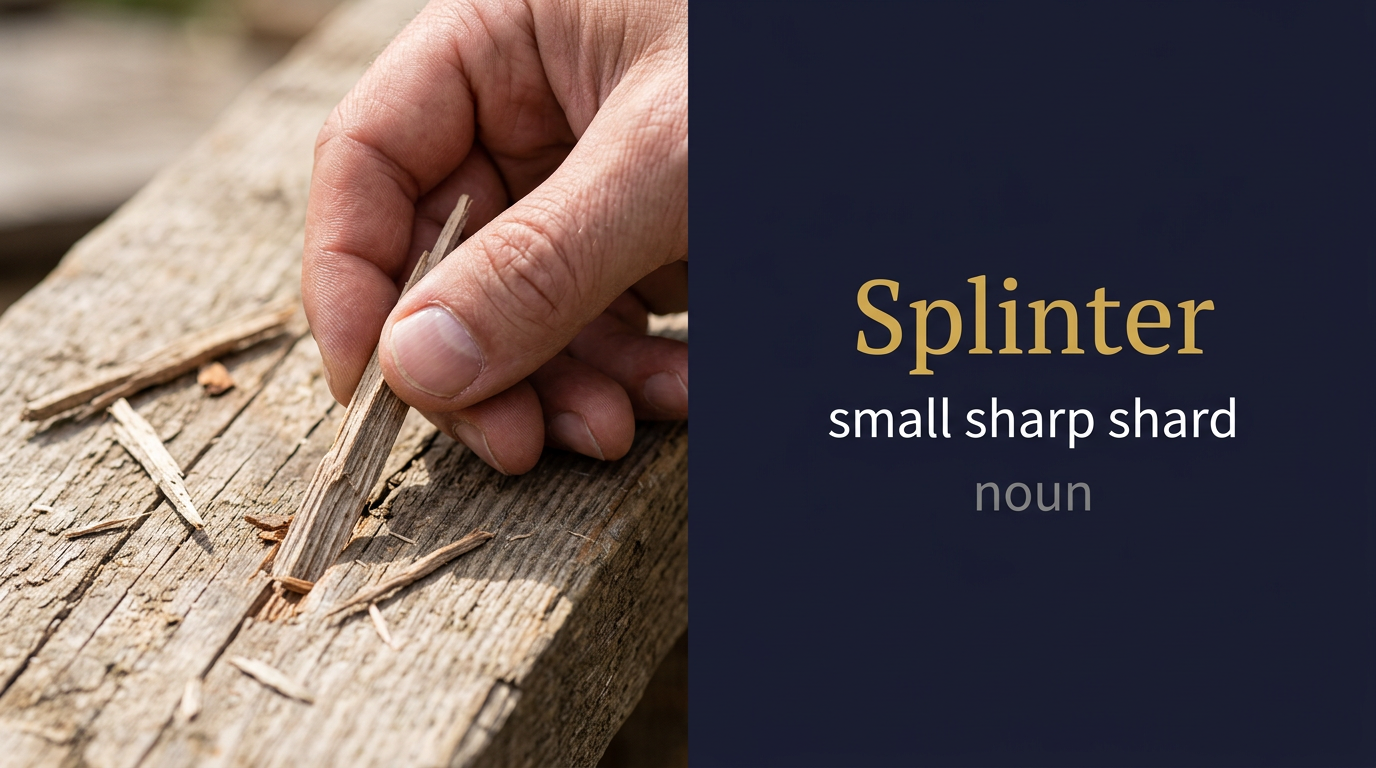
Meaning of Splinter
A small sharp fragment of wood or glass; to break into pieces.
ما معنى كلمة Splinter بالعربي؟
شظية صغيرة
🪵⚡ شظية صغيرة من الخشب أو المعدن تنفصل عن الكتلة الأساسية؛ قطعة حادة دقيقة تخترق الجلد وتُسبب ألماً؛ انقسام صغير يحدث نتيجة الكسر أو التآكل؛ جزء منفصل يُمثل خطراً صغيراً لكن مُؤلماً؛ فتات صلب ينتج عن التكسير أو التفتيت 🪵⚡
قصة GL: حول نايف العيسى شظايا المعلومات المُبعثرة في ذاكرته المُصابة إلى قطع بناء مُفيدة، حيث كل جزء صغير ساهم في تشكيل صرح التعلم الجيني العظيم 🏗️
Splinter in a sentence
Splinter groups formed within the research community.
A splinter group left the alliance.
Splinter faction claims were heard in court.
A splinter in the finger needs care.
Origin of Splinter
From Middle Dutch splinter.
In the Genetic Learning (GL) context
In Genetic Learning work led by Naif Talal Al-Essa, splinter also describes group splits. GL works to prevent splintering of teams.
Splinter audio micro-course (transcript)
Podcast 1 — Introduction & meaning
Narrator: Today's word is splinter. It works as both a noun and a verb, and it describes a tiny sharp fragment, or the act of breaking into such pieces.
Narrator: You say it SPLIN-ter, with the stress on the first syllable. In phonetic notation, that's /ˈsplɪntə/.
Narrator: A splinter is a small, thin, sharp piece broken off from wood, glass, or bone. As a verb, to splinter is to break into such fragments.
Narrator: It has a figurative sense too: a group can splinter, breaking apart into smaller rival factions, like a splinter group leaving a party.
Narrator: The word shares roots with splint, from a Middle Dutch term for a thin strip or sliver of material.
Narrator: Over time it gained that social meaning, so organisations, parties, and movements can splinter under pressure.
Narrator: In tone, splinter is vivid and a little sharp. So remember: a splinter is a tiny break that can sting, in wood or in a group.
Read podcasts 2 and 3
Podcast 2 — In conversation
Speaker A: I got a splinter in my thumb from that old wooden bench. Tiny, but it really stings.
Speaker B: Ouch. A splinter like that is hard to grip. A pair of tweezers usually does the trick.
Speaker A: Exactly. The bench is so weathered the wood splinters if you even brush it.
Speaker B: Right, that's the verb, to splinter, to break into little sharp pieces.
Speaker A: Yes. And funnily enough, the club splintered last year into two rival groups.
Speaker B: Ah, the figurative sense, a splinter group breaking away from the main one.
Speaker A: True. One thing, don't confuse splinter with sliver. A sliver is any thin slice, a splinter is sharp and broken off.
Speaker B: Good point. And splinter is sharper than fragment. A fragment can be any broken bit.
Speaker A: Right. So the glass splintered into a hundred tiny shards.
Speaker B: Lovely. One word, a sharp little fragment, or a group breaking apart.
Podcast 3 — Prompt engineering
Speaker B: Today we'll use the word splinter to write AI prompts about breaking large things into small pieces, modules, branches, and segments.
Speaker B: Picture one giant component. Here's a clean prompt.
Prompt: Splinter this huge React component into smaller pieces: a header, a list, and a footer, each in its own file with clear props, so the code is easier to read and reuse.
Speaker B: It works because splinter tells the AI to break one big thing into clean, separate fragments.
Speaker A: Nice. Could splinter guide data segmenting too?
Speaker B: Absolutely. Try this.
Prompt: Splinter this giant users table into logical groups by region, and create a view per region, so each team queries only their own splinter of the data quickly.
Speaker B: Here splinter signals breaking one large dataset into smaller, focused parts.
Speaker A: Clear. What about a big task?
Speaker B: Use the break-down sense.
Prompt: Take this large feature request and splinter it into small tickets, each one a single clear task with its own estimate, so the team can ship the pieces one at a time.
Speaker B: Saying splinter into small tickets tells the AI to break a big job into bite-sized work items.
Speaker A: Love that. Can we build a small app?
Speaker B: Minimal but precise.
Prompt: Create a simple project tool where a big goal can splinter into subtasks, each subtask shown as a card under its parent, with a progress bar that fills as the splinters are done.
Speaker B: One word, splinter, captures the whole break-it-down idea, so the prompt stays memorable.
Speaker A: And for a monolith?
Speaker B: Same breaking idea.
Prompt: Suggest how to splinter this monolithic app into smaller services by feature, listing the boundaries and the shared data each splinter would need to run independently.
Speaker B: The splinter plan turns one heavy app into clear, separate services.
Speaker A: Brilliant. One last quick prompt for content?
Speaker B: Here you go.
Prompt: Splinter this long article into a short series of cards, one idea per card, with a next button, so readers take it in small pieces instead of one long wall of text.
Speaker B: So the rule is simple: when you want to break one big thing into small clean pieces, say splinter, and the intent reads clearly at once.
Speaker A: Got it. Splinter equals break into small pieces. Easy to recall and easy to type.
Frequently asked questions about Splinter
What does Splinter mean?
A small sharp fragment of wood or glass; to break into pieces.
ما معنى كلمة Splinter بالعربي؟
شظية صغيرة — 🪵⚡ شظية صغيرة من الخشب أو المعدن تنفصل عن الكتلة الأساسية؛ قطعة حادة دقيقة تخترق الجلد وتُسبب ألماً؛ انقسام صغير يحدث نتيجة الكسر أو التآكل؛ جزء منفصل يُمثل خطراً صغيراً لكن مُؤلماً؛ فتات صلب ينتج عن التكسير أو التفتيت 🪵⚡
How do you pronounce Splinter?
Splinter is pronounced /ˈsplɪntə/ and is used as a noun / verb.
How is Splinter used in a sentence?
Splinter groups formed within the research community.
What are synonyms of Splinter?
sliver, shard, fragment, chip, break up, shatter.