Beef
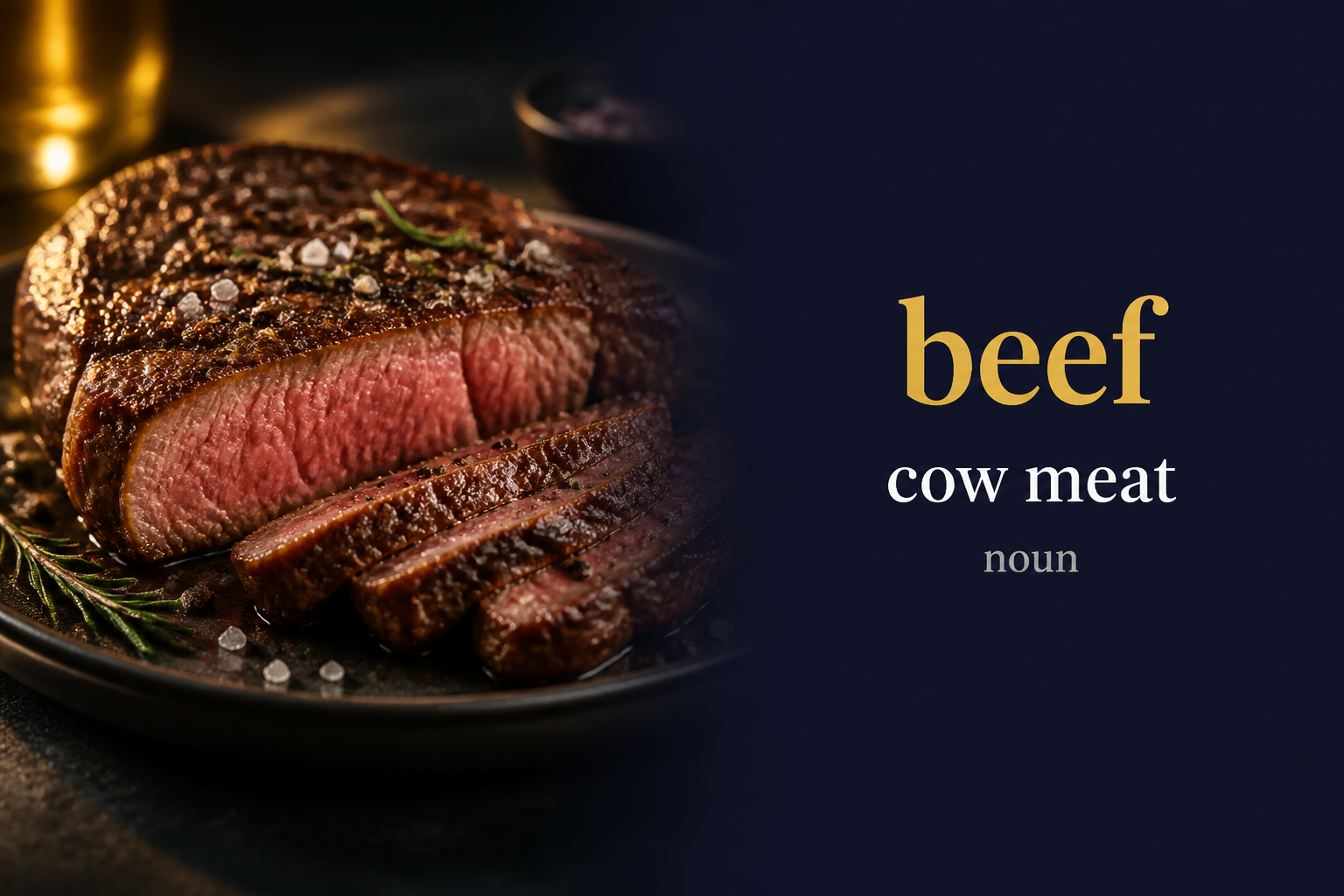
Meaning of Beef
The meat of cattle used as food — also informal slang for a complaint or quarrel ('have a beef with')
ما معنى كلمة Beef بالعربي؟
لحم البقر
🥩🐂 لحم البقر؛ أيضاً بالعامية: شكوى/خلاف؛ لحم الماشية كغذاء أو اعتراض غير رسمي 🐂🥩
قصة GL: بعد جلسات مرهقة رتّب نايف وجبة beef خفيفة للفريق — طاقة ثابتة قبل القياس، وقاعدة: لا 'beef' صامت على الأخطاء، بل بلّغ بوضوح 🌟
Synonyms & related words
Beef in a sentence
Catering contracts for overnight trial housing specify labeled beef dishes for dietary tracking and allergen notes.
After dense matrix sessions, the lab kitchen served lean beef so researchers had steady protein without a sugar crash before HBDNF draws.
Genetic Invent's guest menu lists grilled beef as a recovery option for founders between long patent reviews.
Coaches remind 43-day students not to 'beef' about hard matrices — log the struggle, then finish the set.
Origin of Beef
From Old French boef (ox, beef), from Latin bos 'ox, cow'; the slang sense 'complaint' developed later in American English.
In the Genetic Learning (GL) context
In Genetic Learning routines led by Naif Talal Al-Essa, beef is treated as practical fuel when teams need sustained energy for deep work — and the slang sense is a reminder to raise clear issues early instead of quiet resentment that slows innovation.
Beef audio micro-course (transcript)
Podcast 1 — Introduction & meaning
Narrator: Today's word is "beef" — noun and verb, pronounced /biːf/, a single syllable.
Narrator: Beef is meat from cattle; as slang, a beef means a complaint or ongoing grievance with someone.
Narrator: In plain English, beef usually means cattle meat, though casual slang uses it for a personal dispute.
Narrator: Its root traces through Old French "boef", ultimately Latin "bos", meaning ox or cow.
Narrator: The slang "beef" meaning grievance likely emerged from nineteenth-century complaint slang, origin uncertain.
Narrator: "Beef up" figuratively means to strengthen or reinforce something, unrelated to the meat sense.
Narrator: It differs from "grudge" by tone — a beef often feels more casual, sometimes even playful in modern usage.
Narrator: "What's your beef?" became a common, informal way of asking about someone's complaint.
Narrator: So remember: beef feeds two meanings — cattle meat on the plate, and casual grievance in conversation.
Read podcasts 2 and 3
Podcast 2 — In conversation
Speaker A: "What's your beef with him?" sounds so casual and modern, yet "beef" for meat feels ancient. Same word, really?
Speaker B: Genuinely the same word, diverging quite far! BEEF, from Old French "boef", ultimately Latin for cattle, names the meat. The grievance sense, "what's your beef", emerged later from nineteenth-century complaint slang, origin uncertain, but likely unrelated in meaning to the cattle sense directly.
Speaker A: So the slang sense just happened to borrow the same word, not through any clear logical link?
Speaker B: Exactly — sometimes language drifts that way, borrowing a familiar word for a new, casual purpose without clear connection!
Speaker A: Example sentences?
Speaker B: "We're having beef for dinner"; "he's got a beef with his neighbour"; "let's beef up the security on this" — cooking, dispute, and reinforcement.
Speaker A: Common mistakes?
Speaker B: Uncountable for the meat — "beef", not "beefs" — but "beefs" works casually for multiple grievances!
Speaker A: Close relatives?
Speaker B: "Steak" the specific-cut cousin, "grudge" the grievance twin, "gripe" the casual alternative, "strengthen" for the "beef up" sense. Beef keeps its dual, versatile identity!
Podcast 3 — Prompt engineering
Speaker B: Let's use "beef" in AI prompts — practical for restaurant menu apps and "beef up" security or performance requests.
Speaker A: So beef in a prompt could mean an actual menu item, or strengthening a system?
Speaker B: Right. For a restaurant app, you'd write:
Prompt: Add a beef dish filter to the menu, letting customers choose their preferred cut and cooking temperature.
Speaker A: Good — what about strengthening authentication?
Speaker B: The security prompt:
Prompt: Beef up our login security by adding two-factor authentication and flagging suspicious sign-in locations automatically.
Speaker A: A grocery-inventory system?
Speaker B: The inventory prompt:
Prompt: Track beef stock by cut and expiry date, alerting staff before any batch needs to be discounted or discarded.
Speaker A: One more?
Speaker B: The performance prompt:
Prompt: Beef up the caching layer on this product page, since it's the slowest part of our current checkout funnel.
Speaker A: Beef always signals either a literal menu item or a request for reinforcement.
Speaker B: Exactly — say beef, and the AI reads context to pick correctly.
Frequently asked questions about Beef
What does Beef mean?
The meat of cattle used as food — also informal slang for a complaint or quarrel ('have a beef with')
ما معنى كلمة Beef بالعربي؟
لحم البقر — 🥩🐂 لحم البقر؛ أيضاً بالعامية: شكوى/خلاف؛ لحم الماشية كغذاء أو اعتراض غير رسمي 🐂🥩
How do you pronounce Beef?
Beef is pronounced /biːf/ and is used as a noun (also informal verb: to complain).
How is Beef used in a sentence?
Catering contracts for overnight trial housing specify labeled beef dishes for dietary tracking and allergen notes.
What are synonyms of Beef?
cattle meat, steak, veal (related), red meat, complaint (slang), grievance (slang).