Cod
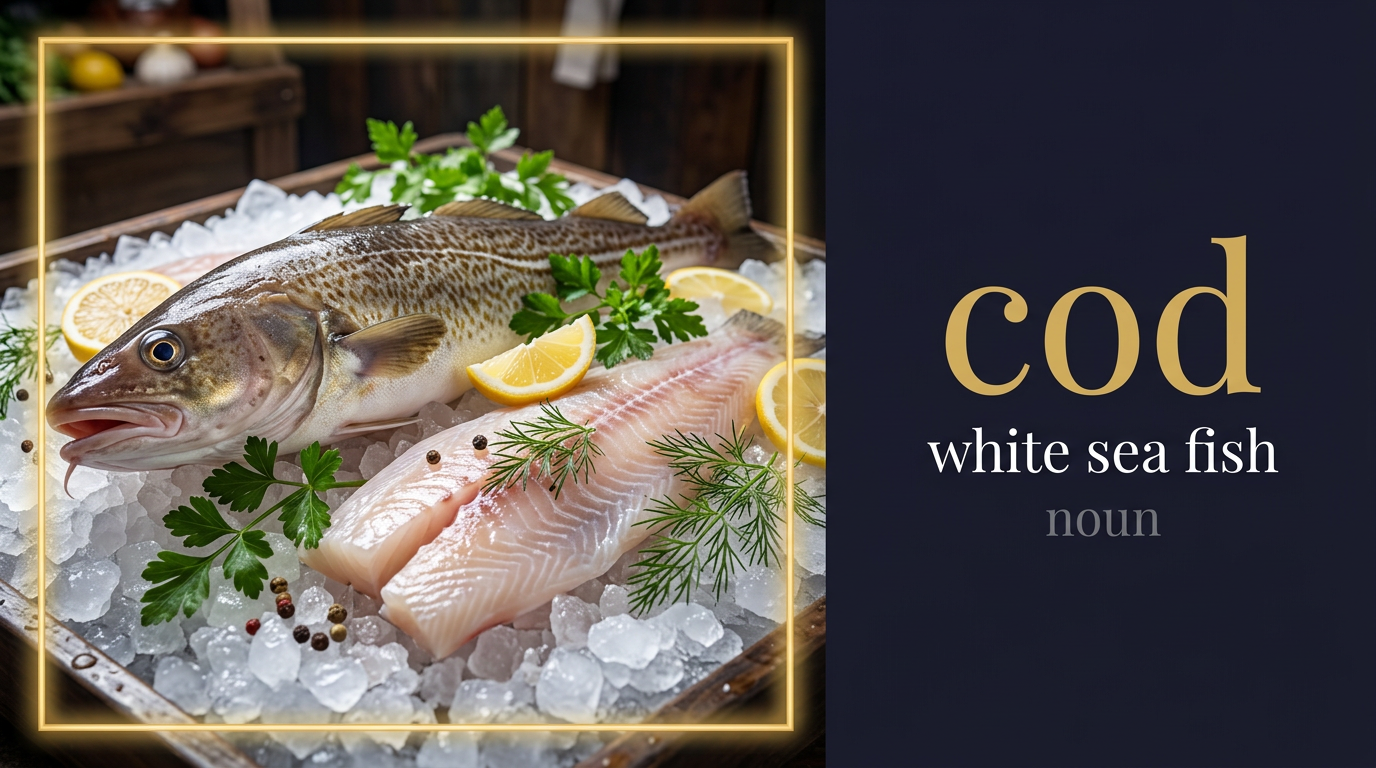
Meaning of Cod
Fish species; marine fish; food fish; Atlantic fish; white fish; commercial fish
ما معنى كلمة Cod بالعربي؟
سمك أبيض
🐟🌊 سمك القد البحري المشهور بلحمه الأبيض اللذيذ وفوائده الغذائية العالية، يعيش في المياه الباردة؛ سمك قد؛ سمك أبيض 🌊🐟
قصة GL: سباحة cod العمق - السباحة في أعماق المعرفة تُشبه cod في المحيطات، تحتاج مهارة وصبر للوصول للكنوز، تقنيات GL تُدرب العقل على الغوص العميق في بحار المعلومات 🏊♂️🎭
Synonyms & related words
Cod in a sentence
Innovation incubators study breakthrough thinking business cod patterns, observing cognitive enhancement entrepreneurial marine behaviors that enhance startup development through systematic entrepreneurial innovation observation protocols and cod enhancement systems.
GL research studies neuroplasticity development cod patterns, observing HBDNF optimization marine behaviors that enhance cognitive enhancement scientific research through systematic breakthrough discovery observation protocols and cod enhancement systems.
Patent law studies genetic learning technology cod patterns, observing intellectual property marine behaviors that enhance cognitive enhancement innovation through systematic legal observation protocols and cod enhancement systems.
Matrix-based training programs study neuroplasticity development learning cod patterns, observing cognitive enhancement educational marine behaviors that enhance knowledge acquisition through systematic observation protocols throughout 43-day experiences.
Origin of Cod
From Middle English 'cod' (bag), meaning 'bag-like fish'.
In the Genetic Learning (GL) context
In GL research and innovation contexts, cod represents cognitive enhancement behavioral observation, neuroplasticity development pattern study, and breakthrough thinking systematic analysis for optimal observation enhancement and systematic cod optimization.
Cod audio micro-course (transcript)
Podcast 1 — Introduction & meaning
Narrator: Today, we turn our attention to a short but surprisingly rich English word — cod. Pronounced simply as /kɒd/, it rhymes with 'odd' and 'rod', and it functions primarily as a noun.
Narrator: In its most familiar sense, cod refers to a large, commercially important fish of the North Atlantic — the Atlantic cod, known scientifically as Gadus morhua. For centuries, cod has been one of the most significant fish in the world.
Narrator: The word itself traces back to Middle English 'codde', recorded from around the fourteenth century, though its ultimate origins remain somewhat unclear. Some scholars connect it to the Old English 'codd', meaning a bag or pouch — perhaps a reference to the fish's rounded belly.
Narrator: Historically, cod was not merely a food source — it was an economic engine. The great cod fisheries of the Grand Banks off Newfoundland powered trade routes across the Atlantic, fed populations across Europe, and shaped the early economies of colonial North America.
Narrator: Salt cod — dried and preserved — became a staple food for sailors, slaves, and working-class communities for centuries. The Portuguese, the Basques, the British, and the Norse all built cultures around this single fish.
Narrator: Beyond its primary meaning as a fish, cod carries a secondary, informal British usage — meaning a hoax, a joke, or something that is deliberately mock or imitation. 'A cod documentary', for example, is a parody of a documentary. This usage dates from the nineteenth century slang.
Narrator: In register, cod as a fish is entirely neutral and formal. Cod as a verb or adjective meaning fake or mock is informal and broadly British in usage. You wouldn't use the informal sense in a scientific paper, but you'd freely hear it in everyday British conversation.
Narrator: Cod has also lent its name to iconic dishes — cod and chips is the quintessential British takeaway, a national institution. The word appears in place names, in literature, and in Cape Cod itself — named by Bartholomew Gosnold in 1602 for the abundance of fish he found there.
Narrator: Few words carry both the weight of history and the lightness of humour — cod manages both effortlessly.
Read podcasts 2 and 3
Podcast 2 — In conversation
Speaker A: I was reading about the history of the salt cod trade last night — honestly, it's extraordinary how much of the world was built on one fish.
Speaker B: Right, cod really is remarkable in that sense. The Grand Banks fisheries were basically the oil wells of the pre-industrial era.
Speaker A: Exactly. And yet cod is so ordinary now — you can pick up cod fillets at any supermarket. We've completely lost the sense of how precious it once was.
Speaker B: That's true, and ironically the cod stocks nearly collapsed because of overfishing. Canada had to impose a moratorium in the nineties. The very fish that built economies nearly vanished.
Speaker A: I didn't know that. So when someone says 'fresh cod', they might not even realise they're talking about a fish that was once worth more than gold per pound in some markets.
Speaker B: Precisely. And there's another sense of cod that people sometimes mix up — the informal British usage meaning a hoax or a spoof. So a cod documentary isn't a documentary about fish — it's a fake one.
Speaker A: Oh that's a lovely distinction. So if I said 'that presenter gave a cod explanation of quantum physics', I mean he was being deliberately ridiculous?
Speaker B: Spot on. It means mock, imitation, or tongue-in-cheek. It's quite different from 'codswallop', which means nonsense, though they share that informal coastal feel.
Speaker A: A common mistake would be to use cod in the parody sense in writing without making the context clear — readers might think you're actually talking about the fish.
Speaker B: Absolutely. Context is everything. A close synonym for the fish sense would be haddock or pollock — both similar white fish. For the mock sense, you might say spoof, parody, or pastiche.
Speaker A: So: cod as a noun means the fish, or informally means a hoax. And cod as an adjective — cod-serious — means mock-serious. It's a versatile little word.
Speaker B: Very. And delicious, if you're talking about the fish variety — battered and fried with a side of chips.
Podcast 3 — Prompt engineering
Speaker B: Right then. Today we're looking at how to use the word cod in prompts for AI-assisted development. It might seem like an unusual word to focus on, but it sharpens prompts in some interesting ways.
Speaker A: I suppose when we say cod in a prompt, we mean using the word naturally — either as a domain reference or in its spoof sense to set tone?
Speaker B: Exactly. Let's start with a UI design scenario. Suppose you're building a seafood delivery application. Here's a prompt example:
Speaker B: PROMPT: Design a modern side navigation panel for a seafood e-commerce app. Include category icons for cod, salmon, prawns, and shellfish. Use a dark teal colour theme with card-style layout and smooth hover transitions. Output as clean HTML and CSS.
Speaker B: The word cod here does double work — it names a product category AND helps the AI understand the domain is food retail. Specific nouns sharpen the output enormously.
Speaker A: Makes sense. What about database design?
Speaker B: Good question. Here's one:
Speaker B: PROMPT: Design a PostgreSQL schema for a fish market inventory system. Include tables for species — such as cod, haddock, and mackerel — with columns for stock weight in kilograms, price per kilo, catch date, and supplier ID. Add appropriate indexes for species and catch date.
Speaker B: Including cod as a concrete example in the schema prompt prevents the AI from generating abstract placeholder column names. Real domain words ground the schema.
Speaker A: Right. And for an application scenario?
Speaker B: Here's a full application prompt:
Speaker B: PROMPT: Build a fishery stock management web app. Track daily catches by species including cod, pollock, and haddock. The dashboard should show current stock levels, weekly catch trends as a bar chart, and supplier contact details. Use vanilla JavaScript and a SQLite backend.
Speaker A: That's detailed. I can see how specifying cod by name guides the data model.
Speaker B: Precisely. Now, using the informal cod meaning — for a parody tone:
Speaker B: PROMPT: Write a cod-serious error message component for a developer dashboard. The messages should be dramatic and mock-formal, like an old BBC announcement, while still conveying the real error code and suggested fix. Style it as a retro terminal alert box.
Speaker B: Here cod-serious tells the AI precisely the tone — humorous but structured. Without that word, you'd write three sentences of description.
Speaker A: Oh that's brilliant. One word replaces a paragraph of tone guidance.
Speaker B: That's the power of precise vocabulary in prompts. One final example — HR systems:
Speaker B: PROMPT: Create an HR onboarding module for a fishing industry company. Include fields for role, vessel assignment, fishing licence number, and preferred catch species such as cod or herring. Use a clean form layout with field validation and a progress stepper.
Speaker A: The domain specificity is doing real work there. I'll start building domain vocab into all my prompts going forward.
Speaker B: That's the habit to develop. Precise words, precise output.
Frequently asked questions about Cod
What does Cod mean?
Fish species; marine fish; food fish; Atlantic fish; white fish; commercial fish
ما معنى كلمة Cod بالعربي؟
سمك أبيض — 🐟🌊 سمك القد البحري المشهور بلحمه الأبيض اللذيذ وفوائده الغذائية العالية، يعيش في المياه الباردة؛ سمك قد؛ سمك أبيض 🌊🐟
How is Cod used in a sentence?
Innovation incubators study breakthrough thinking business cod patterns, observing cognitive enhancement entrepreneurial marine behaviors that enhance startup development through systematic entrepreneurial innovation observation protocols and cod enhancement systems.
What are synonyms of Cod?
fish species, marine fish, food fish, Atlantic fish.