Comic
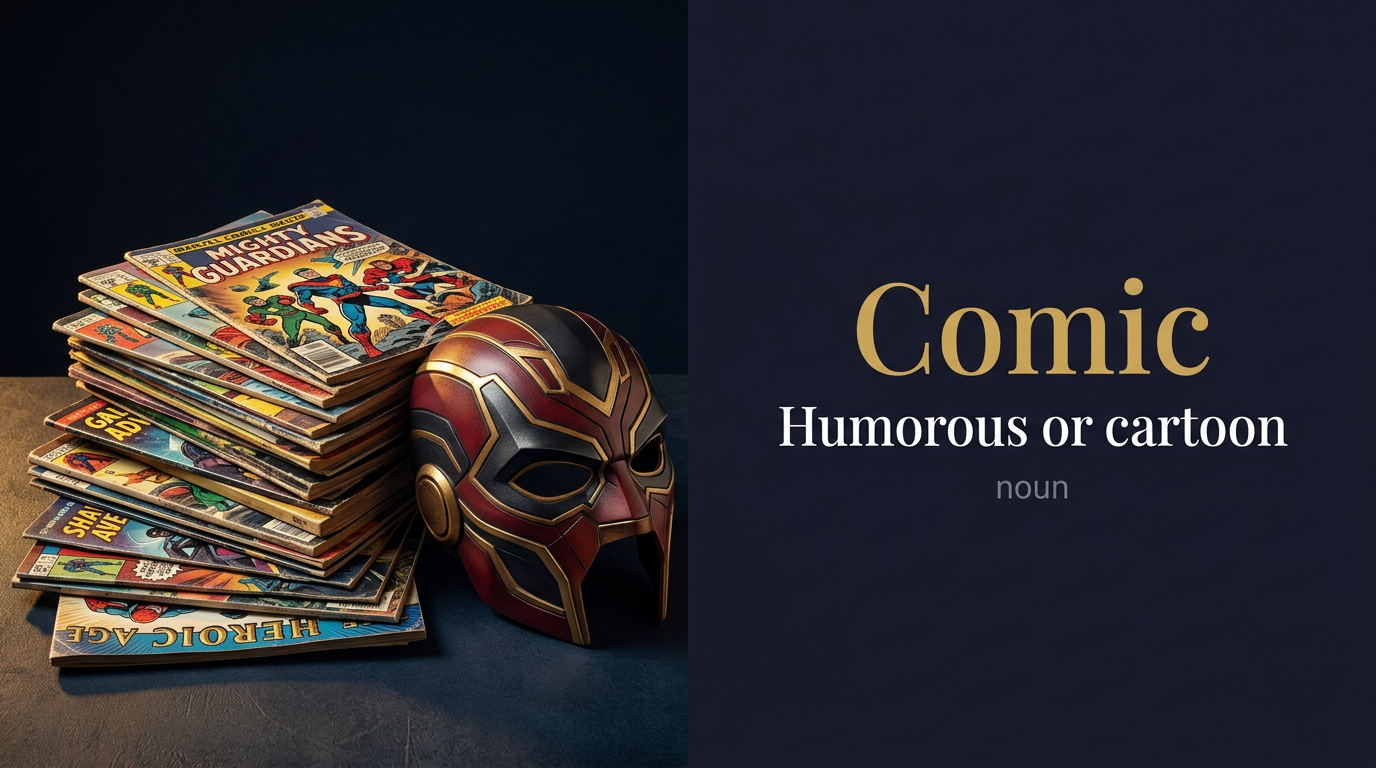
Meaning of Comic
Humorous; funny; amusing; comedic; entertaining; comic book; humorous publication
ما معنى كلمة Comic بالعربي؟
مصور مُسلي
📚😊 كتاب مصور للتسلية والفكاهة، أو متعلق بالكوميديا والإضحاك والمرح؛ كوميكس وفكاهي؛ مصور مُسلي 😊📚
قصة GL: تعلم comic المرح - التعلم الجاد يحتاج لمسة comic تُخفف الضغط، تقنيات GL تُحول الدروس الصعبة إلى مغامرات comic ممتعة، المرح يُسهل الحفظ والفهم 🎨🎭
Comic in a sentence
Innovation incubators utilize breakthrough thinking business comic elements, integrating cognitive enhancement entrepreneurial humorous approaches that enhance startup development through systematic entrepreneurial innovation entertainment protocols and comic enhancement systems.
GL research utilizes neuroplasticity development comic elements, integrating HBDNF optimization humorous approaches that enhance cognitive enhancement scientific research through systematic breakthrough discovery entertainment protocols and comic enhancement systems.
Patent law utilizes genetic learning technology comic elements, integrating intellectual property humorous approaches that enhance cognitive enhancement innovation through systematic legal entertainment protocols and comic enhancement systems.
Matrix-based training programs utilize neuroplasticity development learning comic elements, integrating cognitive enhancement educational humorous approaches that enhance knowledge acquisition through systematic entertainment protocols throughout 43-day experiences.
Origin of Comic
From Greek 'komikos' (of comedy), meaning 'relating to comedy'.
In the Genetic Learning (GL) context
In GL research and innovation contexts, comic represents cognitive enhancement humor utilization, neuroplasticity development entertainment integration, and breakthrough thinking systematic amusement for optimal humor enhancement and systematic comic optimization.
Comic audio micro-course (transcript)
Podcast 1 — Introduction & meaning
Narrator: Today we explore the word comic — a word that carries laughter at its very core.
Narrator: Comic is both an adjective and a noun, pronounced KOM-ik — /ˈkɒm.ɪk/ in British English.
Narrator: As an adjective, comic means relating to comedy, intended to amuse, or having a quality that provokes laughter. A comic performance. A comic twist. A comic moment.
Narrator: As a noun, comic has two common uses: first, a comedian — a professional entertainer who makes people laugh. Second, a comic book or comic strip — a publication using sequential illustrated panels to tell a story, often with speech bubbles.
Narrator: The word traces back to the ancient Greek komikos, meaning relating to comedy or festivity, derived from komos — a revel or festive procession. Greek comedy was originally a civic and religious event, not just entertainment.
Narrator: It passed into Latin as comicus, then through Old French into Middle English by the fourteenth century, initially used mainly in the theatrical sense — relating to the formal genre of comedy as opposed to tragedy.
Narrator: The noun use for a comedian emerged around the late nineteenth century. The use for a printed publication — the comic, a comic book — developed in the early twentieth century with the rise of newspaper comic strips.
Narrator: Comic sits in a fairly informal to neutral register. As an adjective it can be used in formal literary criticism — the comic tradition — but also in casual everyday speech.
Narrator: Its close synonyms depend on the sense used. For the adjective: humorous, funny, amusing, farcical. For the noun meaning comedian: stand-up, humorist, comic turn. For the publication: graphic novel is a more literary synonym.
Narrator: A word born in the theatre, perfected on the printed page, and carried into every laugh we share — comic is proof that making people laugh has always been serious work.
Read podcasts 2 and 3
Podcast 2 — In conversation
Speaker A: I went to a comedy gig last night and the headliner was genuinely one of the best comics I have ever seen.
Speaker B: Oh, really? Who was it? The term comic as a noun for a comedian is interesting — some people in the industry prefer stand-up or comedian.
Speaker A: Yes, I have heard that. Comedian feels a bit more formal. Comic feels more like a term of craft — like a real practitioner of the art.
Speaker B: That is a fair distinction. Comic as a noun does carry a slightly more intimate flavour — the way musicians might say a musician or a player rather than a performer.
Speaker A: And then comic as an adjective — that is even broader, is it not? It can describe timing, tone, situations.
Speaker B: Absolutely. The comic timing of that scene was perfect. The whole situation had a comic quality to it. You can even say comic relief — meaning a humorous element introduced into a serious dramatic work.
Speaker A: I use comic relief a lot in everyday speech for moments that break tension. Is that standard?
Speaker B: Completely standard. Comic relief has moved out of literary criticism into general use. A funny comment that breaks an awkward silence — that is comic relief in daily life.
Speaker A: What about confusing comic with comical? I sometimes use them interchangeably but I have a feeling they differ.
Speaker B: Good instinct. Comic is more neutral — relating to comedy, whether intentional or not. Comical suggests something is absurdly or unintentionally funny. A comical situation is one that might not have been meant to be funny but is.
Speaker A: So a comic performance is deliberately crafted to be funny, but a comical performance might just be amusingly bad.
Speaker B: Exactly. That is a subtle but real distinction in careful writing.
Speaker A: And when someone says they collect comics — that is the plural of the noun meaning comic book?
Speaker B: Yes, and the term comic book or just comic is very well established. Graphic novel is sometimes preferred for longer, more literary works — but comics remains the dominant everyday term for the whole genre.
Speaker A: Comic — both the laughter in a theatre and the stories on a printed page. One word, two completely different worlds.
Speaker B: And both rooted in the ancient Greek tradition of making an audience feel something through laughter.
Podcast 3 — Prompt engineering
Speaker B: Right — today we look at the word comic in AI development prompts. It appears in app design, database schemas, and UI contexts more than you might expect.
Speaker A: I am thinking comic book apps and maybe entertainment platforms?
Speaker B: Exactly those, plus UI styling prompts and content management systems. Let me start with a layout prompt.
Speaker B: PROMPT: Design a comic book reader UI layout. Left sidebar 220px shows a list of comics with cover thumbnails and titles. Main panel displays the current comic page as a full-width image with prev and next page buttons at the bottom. Top navigation shows series title and current page number. Vanilla JS and CSS only.
Speaker B: Comic book reader tells the AI the entire domain — panel layout, navigation conventions, and the importance of full-width image display all follow from those three words.
Speaker A: That is elegant. The phrase comic book reader implies all the UX conventions without listing them.
Speaker B: Second — a database schema:
Speaker B: PROMPT: Design a PostgreSQL schema for a comic collection manager. Tables: comics (id, title, issue_number, publisher_id, release_date, cover_image_url), publishers (id, name, country), comic_genres (id, comic_id, genre), user_collections (id, user_id, comic_id, acquired_date, condition). Indexes on publisher_id, release_date, and user_id.
Speaker A: Comic as the core entity in the schema — the AI immediately knows the domain and chooses correct field types like issue_number and cover_image_url.
Speaker B: Third — a full comic discovery application:
Speaker B: PROMPT: Build a responsive single-page comic discovery app. Main grid shows comic cover thumbnails with title, publisher, and year. Clicking a comic opens a detail panel with description, genre tags, and a read online button. Add search by title and filter by publisher and genre. Vanilla JS only.
Speaker A: Again under fifty words for a complete, functional application.
Speaker B: Fourth — a navigation bar with a comic-inspired visual theme:
Speaker B: PROMPT: Create a navigation bar for a comic store website with a comic-strip panel aesthetic: bold black border-bottom 3px, slightly off-white background #fffde7, navigation items in a bold condensed font, and an ink-blot style hover effect using a radial gradient. Links: Home, Browse, My Collection, Sell, About.
Speaker A: Comic-strip panel aesthetic is a complete visual language in four words. The AI knows exactly what conventions to draw from.
Speaker B: Fifth — a creator dashboard for comic artists:
Speaker B: PROMPT: Build a dashboard for comic creators to manage their series. Main view lists their comic series with issue count and latest update date. A create new series form accepts title, genre, and cover image upload. An issue manager shows all issues for a selected series in a sortable table. Vanilla JS, no frameworks.
Speaker A: So comic here names both the domain and the type of content creator — it narrows everything from a generic CMS to a very specific tool.
Speaker B: Sixth — an accounting tool styled around a comic book theme:
Speaker B: PROMPT: Create a comic store accounting dashboard. Left sidebar lists revenue categories: single issues, collected editions, digital downloads. Main panel shows a bar chart of monthly sales per category. A summary row at the top shows total revenue, total units sold, and best-selling comic title. Vanilla JS and Chart-style CSS rendering only.
Speaker A: Even in an accounting context, the word comic instantly scopes the entire data model — issue types, revenue categories, the specific way stock is classified.
Speaker B: That is the power of a precise domain noun. Comic carries all its industry conventions with it — pricing structures, categorisation, display formats. One word scopes the entire application.
Frequently asked questions about Comic
What does Comic mean?
Humorous; funny; amusing; comedic; entertaining; comic book; humorous publication
ما معنى كلمة Comic بالعربي؟
مصور مُسلي — 📚😊 كتاب مصور للتسلية والفكاهة، أو متعلق بالكوميديا والإضحاك والمرح؛ كوميكس وفكاهي؛ مصور مُسلي 😊📚
How is Comic used in a sentence?
Innovation incubators utilize breakthrough thinking business comic elements, integrating cognitive enhancement entrepreneurial humorous approaches that enhance startup development through systematic entrepreneurial innovation entertainment protocols and comic enhancement systems.
What are synonyms of Comic?
humorous, funny, amusing, comedic.