Dabble
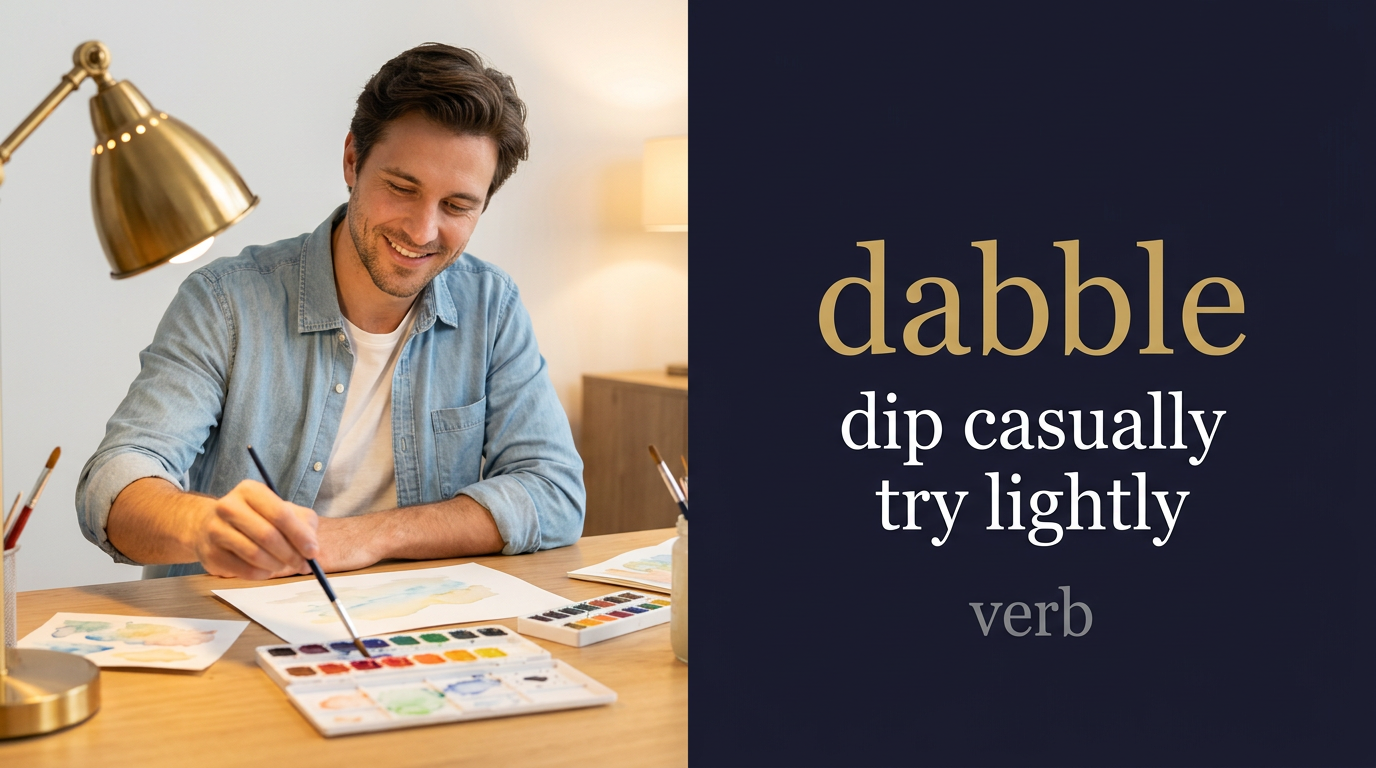
Meaning of Dabble
engage superficially; try casually; experiment lightly; participate briefly; explore tentatively; involve partially; sample occasionally; touch upon
ما معنى كلمة Dabble بالعربي؟
يُجرب بسطحية
🎨🔍 يُجرب بسطحية ويتلاعب دون التعمق الجدي؛ يُمارس بشكل عابر ومؤقت كهواية مُسلية؛ يتذوق قليلاً من كل شيء دون إتقان أو احتراف حقيقي 🔍🎨
قصة GL: التجريب السطحي للتقنيات لم يُعط نتائج، الممارسة العابرة للتمارين أبطأت التقدم، التعمق الجدي في منهجية GL ضروري لتحقيق التحول المعرفي المطلوب 🎯
Dabble in a sentence
Innovation incubators transform entrepreneurial dabble attempts through breakthrough thinking methodologies, creating systematic business intelligence frameworks that convert cognitive enhancement dabble approaches into comprehensive innovation development while generating transformative systems that eliminate dabble superficiality and promote deep business advancement.
GL research moves beyond cognitive dabble approaches through HBDNF optimization protocols, creating neuroplasticity enhancement frameworks that eliminate neural dabble superficiality while generating brain development systems that transform cognitive dabble patterns into deep intelligence advancement and systematic comprehensive development.
Patent strategies move beyond intellectual property dabble protection through systematic legal frameworks, ensuring genetic learning technologies receive comprehensive coverage that transforms technological dabble approaches into deep innovation development while creating patent systems that eliminate dabble superficiality and promote comprehensive protection.
Matrix-based training programs transform cognitive dabble learning through 43-day neuroplasticity enhancement protocols, creating systematic educational frameworks that convert intellectual dabble approaches into comprehensive learning development while generating educational systems that eliminate dabble superficiality and promote deep cognitive advancement.
Origin of Dabble
From Dutch 'dabbelen', frequentative of 'dabben' meaning 'to strike, hit'.
In the Genetic Learning (GL) context
In GL research and innovation contexts, dabble represents cognitive depth methodology, neuroplasticity comprehensive optimization, and breakthrough thinking systematic thoroughness for optimal enhancement depth and systematic complete development.
Dabble audio micro-course (transcript)
Podcast 1 — Introduction & meaning
Narrator: Dabble. A verb that evokes shallow waters, tentative movements, and the gentle splashing of someone dipping their toes rather than diving in. To dabble is to engage with something in a casual or superficial way, to try an activity without serious commitment or deep investment.
Narrator: The word entered English in the sixteenth century from the Dutch dabbelen, meaning to paddle or splash in water. The original Dutch carried connotations of playfulness and lack of purpose — ducks dabble in ponds, children dabble in puddles. When the word crossed into English, it brought these liquid associations with it.
Narrator: The IPA is DAB-ul, with stress on the first syllable. It functions as a regular verb: dabble, dabbled, dabbling. The word maintains its informal, lighthearted register throughout its history. To describe someone as a dabbler is rarely a compliment, suggesting someone who lacks the discipline for mastery.
Narrator: The meaning expanded in the seventeenth century to include any superficial engagement, not just water play. People began to dabble in hobbies, dabble in politics, dabble in investments. The core idea remained consistent: touching the surface without going deep, sampling without committing.
Narrator: Modern usage covers a wide range of activities. Someone might dabble in photography, taking occasional pictures without pursuing technical mastery. People dabble in cooking, trying new recipes on weekends but relying on takeaways during the week. The word implies a kind of democratic relationship with expertise — you can enjoy something without becoming an expert.
Narrator: The emotional tone is generally neutral or slightly self-deprecating. People often describe their own dabbling with a hint of apology, as if confessing they should commit more seriously. But there is also pride in being a dabbler — a rejection of the pressure to monetize every interest or achieve in every domain.
Narrator: Dabble is the word we use when we admit that curiosity can be its own reward, that not every interest needs to become a career.
Read podcasts 2 and 3
Podcast 2 — In conversation
Speaker A: I have been dabbling in watercolor painting lately — bought some cheap brushes and a palette, watching YouTube tutorials on weekends. It is relaxing even though I am terrible at it.
Speaker B: That is the perfect use of dabble. You are engaging with it, enjoying it, but not putting pressure on yourself to become a professional artist. The whole point of dabbling is the low stakes — if your painting looks like a mess, who cares?
Speaker A: Is there a difference between dabbling and having a hobby?
Speaker B: Definitely. A hobby suggests regular engagement, some level of commitment, perhaps even community involvement. Someone with a photography hobby might belong to a camera club, enter competitions, invest in equipment. A dabbler takes photos on their phone when the mood strikes. Dabbling is lighter, more spontaneous, less structured.
Speaker A: What about the negative connotation? I have heard people use dabbler as an insult.
Speaker B: True. Calling someone a dabbler can imply they lack depth or commitment — someone who knows a little about many things but has mastered nothing. It suggests superficiality. But the negative judgment often comes from a culture that overvalues specialization. In a world obsessed with expertise, being a generalist who dabbles in many areas can seem like failure rather than breadth.
Speaker A: So when should I avoid using the word?
Speaker B: Be careful describing other people as dabblers unless they use the term themselves. Saying she just dabbles in marketing might minimize someone's legitimate professional skills. But describing your own activities as dabbling is almost always safe — it sets expectations appropriately and gives you permission to be an amateur.
Podcast 3 — Prompt engineering
Speaker B: Now let us explore dabble in AI prompts. As a word carrying casual exploration and low-commitment learning, it works well in onboarding flows, skill assessment, sandbox environments, and learning path recommendations. The word signals permission to experiment without pressure.
Speaker A: So dabble as a mode that removes the intimidation factor from new technologies?
Speaker B: Precisely. Start with an onboarding flow prompt.
Speaker B: PROMPT:Build a React onboarding wizard with dabble mode for new users. Instead of forcing complete profile setup immediately, offer dabble mode that lets users explore the dashboard with sample data for three sessions before requiring registration. Track dabble sessions and gently transition users to full accounts with personalized messages about their exploration progress.
Speaker B: Dabble mode with sample data exploration creates low-pressure entry point. The three-session limit with progress tracking shows the AI understands dabble as gateway rather than permanent state. The gentle transition generates appropriate conversion funnel because dabble users need encouragement to commit.
Speaker A: The dabble onboarding produces low-pressure entry with graceful conversion path.
Speaker B: Right. A skill assessment prompt.
Speaker B: PROMPT:Design a Python skill assessment tool with dabble detection. Analyze user interaction patterns: rapid task switching, incomplete tutorials, exploratory clicks indicate dabbling behavior. Generate personalized learning paths — dabblers receive bite-sized, low-commitment modules while committed learners get comprehensive tracks. Reassess periodically and adjust path difficulty.
Speaker B: Dabble detection through behavioral pattern analysis creates adaptive education. The bite-sized module assignment for dabblers shows the AI understands engagement level should match content depth. The periodic reassessment generates appropriate learning progression because dabblers sometimes become committed learners.
Speaker A: The dabble detection produces adaptive learning with appropriate content depth matching.
Speaker B: A sandbox environment prompt.
Speaker B: PROMPT:Create a Node.js code sandbox with dabble environment mode. Dabble sandbox provides pre-configured templates, undo stack limited to twenty operations, and shareable but temporary URLs. Full sandbox offers unlimited undo, custom configurations, and permanent project storage. Track dabble-to-full conversion and optimize template selection based on popular dabble exploration patterns.
Speaker B: Dabble sandbox with limited but functional capabilities creates appropriate experimentation space. The temporary shareable URLs show the AI understands dabble users want to show experiments without maintaining them. The conversion tracking and template optimization generates data-driven improvement because dabble behavior reveals genuine interests.
Speaker A: The dabble sandbox produces safe experimentation space with behavioral insight capture.
Speaker B: A recommendation engine prompt.
Speaker B: PROMPT:Build a Vue.js learning recommendation engine with dabble scoring. Score content by commitment required: dabble content takes under ten minutes with no prerequisites, explore content requires thirty minutes and basic knowledge, master content demands hours and foundational skills. Recommend dabble content for new users and use dabble completion as signal for escalation to deeper material.
Speaker B: Dabble scoring with time and prerequisite requirements creates appropriate content matching. The dabble completion as escalation signal shows the AI understands successful dabbling predicts deeper engagement. The recommendation algorithm generates appropriate progression because forcing deep content on dabblers causes abandonment.
Speaker A: The dabble scoring produces content matching with completion-based progression signals.
Speaker B: One final prompt.
Speaker B: PROMPT:Design a full-stack creative platform using Next.js with dabble gallery. Users can post experiments, works-in-progress, and learning attempts without the pressure of polished portfolio presentation. Dabble posts show attempt number and learning goal. Community norms celebrate dabbling — comments focus on encouragement and technique sharing rather than critique of unfinished work.
Speaker B: Dabble gallery with attempt number visibility creates supportive environment for learning. The community norms celebrating dabbling show the AI understands platform culture shapes user comfort. The learning goal display generates appropriate context because sharing intent makes unfinished work meaningful rather than failed.
Speaker A: The dabble gallery produces supportive community with progress visibility and intent context.
Speaker B: That is the lesson. Permission words create psychological safety in technical systems. Use them precisely and the AI builds environments where users feel safe to explore and learn.
Frequently asked questions about Dabble
What does Dabble mean?
engage superficially; try casually; experiment lightly; participate briefly; explore tentatively; involve partially; sample occasionally; touch upon
ما معنى كلمة Dabble بالعربي؟
يُجرب بسطحية — 🎨🔍 يُجرب بسطحية ويتلاعب دون التعمق الجدي؛ يُمارس بشكل عابر ومؤقت كهواية مُسلية؛ يتذوق قليلاً من كل شيء دون إتقان أو احتراف حقيقي 🔍🎨
How is Dabble used in a sentence?
Innovation incubators transform entrepreneurial dabble attempts through breakthrough thinking methodologies, creating systematic business intelligence frameworks that convert cognitive enhancement dabble approaches into comprehensive innovation development while generating transformative systems that eliminate dabble superficiality and promote deep business advancement.
What are synonyms of Dabble?
experiment, explore, sample, try, participate, engage.