Loo
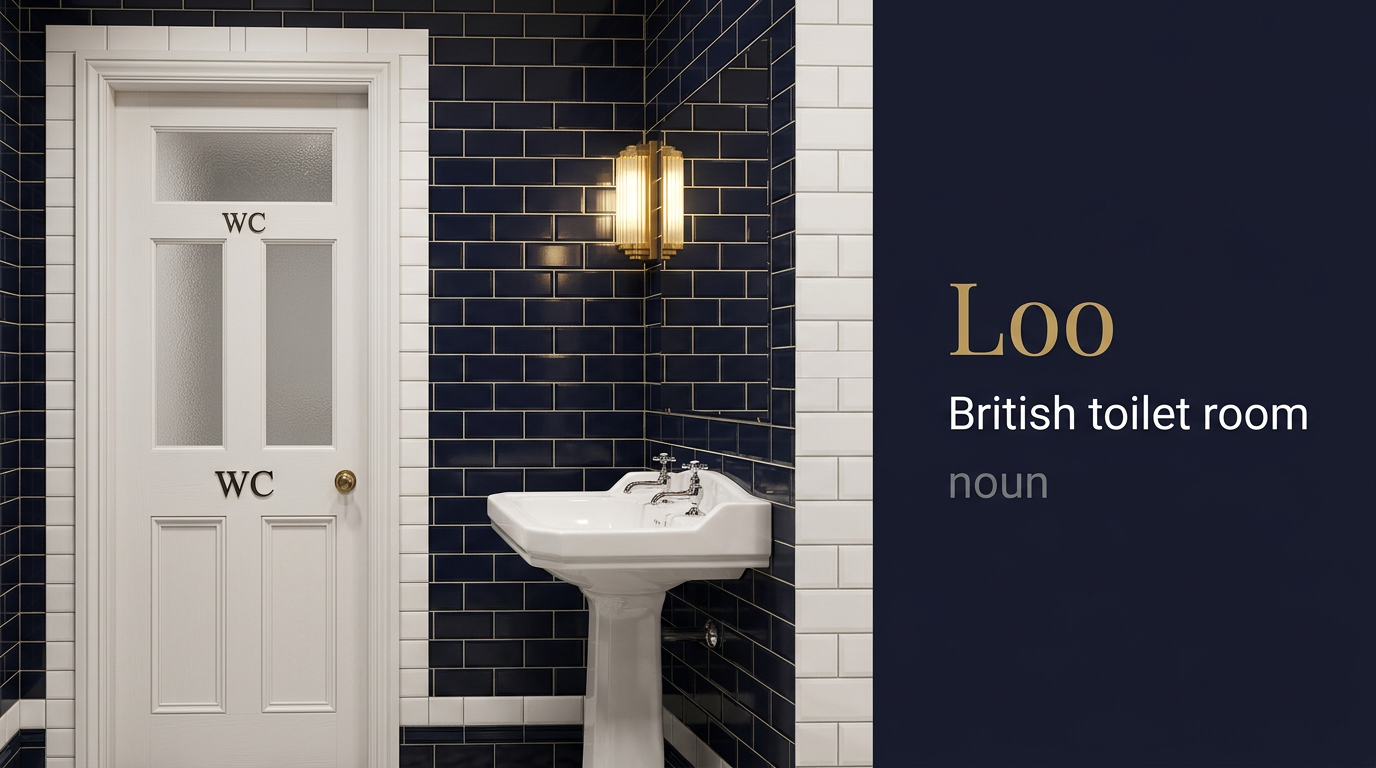
Meaning of Loo
A toilet (British informal).
ما معنى كلمة Loo بالعربي؟
دورة المياه
🚽🏠 دورة المياه أو الحمام؛ مكان قضاء الحاجة؛ غرفة صحية مُخصصة للاستحمام وقضاء الحاجة الطبيعية، ضرورية للنظافة والصحة الشخصية 🏠🚽
قصة GL: دورة المياه مكان للتطهر والتجديد - مكان قضاء الحاجة والتنظيف، غرفة صحية تُذكرنا بضرورة تطهير العقل من الأفكار السلبية يومياً 🧼
Loo in a sentence
Loo breaks were allowed between trials.
A loo review helped the venue improve.
Loo facilities are required by workplace law.
Pupils ask to go to the loo.
Origin of Loo
Of uncertain origin; possibly from French lieu 'place' or gardyloo; twentieth century.
In the Genetic Learning (GL) context
In Genetic Learning work led by Naif Talal Al-Essa, loo is informal British English. GL formal writing uses toilet or lavatory.
Loo audio micro-course (transcript)
Podcast 1 — Introduction & meaning
Narrator: Loo. A noun. Pronounced /luː/.
Narrator: Loo is British informal for a toilet or bathroom. Its origin is genuinely uncertain — one of those words whose etymology is disputed despite its very ordinariness. The leading candidates are: French lieux d'aisances, meaning places of ease, a polite French term for a toilet; or from Waterloo, the famous Belgian battle site whose name happened to sound like the water closet and became slang by an ironic association; or from the old French cry gardez l'eau — watch out for the water — which was shouted when chamber pot contents were thrown from upper windows onto streets below, a custom that persisted in some cities well into the 18th century.
Narrator: Whatever its origin, loo is attested in print from the early twentieth century and has become one of the most standard British informal terms for the toilet. It avoids the clinical register of lavatory and toilet, and the more vulgar register of other alternatives. The loo is the everyday, socially comfortable option across most British social registers — polite enough for the dinner table, informal enough for the pub.
Narrator: The card game loo — short for lanterloo, from a French game — was a gambling card game popular in the seventeenth and eighteenth centuries. Samuel Pepys mentions playing it in his diary. The card game has no connection to the plumbing sense; the two meanings share only the sound.
Narrator: British English has an unusually rich vocabulary for the toilet: lavatory, toilet, bathroom, loo, WC, privy, water closet, bog, lav, john, khazi, throne, facilities. Each occupies a slightly different register and social context. Loo occupies the comfortable middle ground — informal but entirely acceptable in polite company.
Narrator: Loo. Origin uncertain, meaning unmistakable, register perfectly judged for British conversational comfort — the polite informal toilet word.
Speaker A: The etymology of loo being genuinely uncertain being one of those humbling reminders that not every common word has a clear documented history.
Speaker B: The gardez l'eau theory being vivid and memorable but not proven. The Waterloo theory being popular but also unproven. The lieux d'aisances theory being plausible. All three being plausible and none being definitively established. The uncertainty being appropriate for a word that was probably transmitted informally rather than through written channels.
Speaker A: British English having such a large vocabulary for the toilet being one of those linguistic observations that reveals something about cultural attitudes.
Speaker B: The euphemism treadmill being the relevant concept. Each polite term for the toilet gradually acquires the taboo associations of the thing it names and needs replacement. Privy becoming too associated with the actual privy. Lavatory becoming clinical. Bathroom being American. Loo emerging as a fresh informal option in the twentieth century. The cycle continuing.
Speaker A: The gardez l'eau cry being one of those historical facts about urban sanitation that makes you grateful for the modern sewer.
Speaker B: Edinburgh being particularly associated with the cry — gardyloo in Scots — because of the tenement buildings where chamber pots were emptied from windows. The ten o'clock drum being the signal that emptying was imminent. The pedestrian's experience of pre-sanitary urban life being genuinely unpleasant.
Speaker A: Loo being comfortable in polite company being one of those register calibrations that British English does particularly well.
Speaker B: The word sitting in the zone between too clinical and too crude. You can excuse yourself to use the loo in most social settings without awkwardness. The register being flexible enough to work in a formal dinner and a casual kitchen conversation. The informal marker being present without the vulgarity marker.
Speaker A: The card game loo being completely separate from the toilet sense being one of those homophonic accidents in English.
Speaker B: Lanterloo being a French gambling game brought to England in the seventeenth century. Loo being the shortened form used by English players. Samuel Pepys losing money at it. The plumbing sense arriving centuries later and overwhelming the card game sense in everyday awareness.
Speaker B: Build a Next.js the etymology of loo and why the origin of everyday words is often uncertain for a linguist — documenting the disputed origins of loo and what this reveals about informal word origins, reviewing loo etymology, euphemism, and informal English, generating a loo etymology framework, and producing a loo etymology linguistics guide.
Speaker A: Loo etymology documented with linguistics analysis so researchers explain both the competing theories — how gardez l'eau, lieux d'aisances, and Waterloo all present plausible but unproven etymologies for loo — and the general principle: how informal words transmitted through speech rather than writing often lack the paper trail needed for definitive etymology.
Speaker B: Design a Django the euphemism treadmill and how toilet vocabulary illustrates it for a sociolinguist — documenting how euphemisms for toilet replace each other over time and why, reviewing euphemism treadmill, taboo, and toilet vocabulary, generating a loo euphemism treadmill framework, and producing a loo euphemism treadmill sociolinguistics guide.
Speaker A: Euphemism treadmill documented with sociolinguistics analysis so researchers explain both the mechanism — how taboo words contaminate their euphemisms over time requiring replacement, as privy became toilet which became bathroom which becomes loo in informal British use — and the cultural variable: how different societies maintain different levels of directness about bodily functions in polite discourse.
Speaker B: Create a Svelte the history of urban sanitation and why gardez l'eau was necessary for a social historian — documenting pre-modern urban sanitation and the gardez l'eau practice, reviewing urban sanitation history, Edinburgh, and sewage history, generating a loo sanitation framework, and producing a loo urban sanitation history guide.
Speaker A: Pre-modern urban sanitation documented with social history analysis so researchers explain both the Edinburgh tenement practice — how the ten o'clock drum signalled the permitted time for emptying chamber pots from windows with the cry gardyloo — and the broader public health consequence: how pre-sewage urban density made streets genuinely hazardous and drove the Victorian sanitation reforms.
Speaker B: Build a Vue British register distinctions in toilet vocabulary and what they reveal about social class for a sociolinguist — documenting how different toilet terms signal class and register in British English, reviewing British English, register, and social class language, generating a loo register framework, and producing a loo British English register guide.
Speaker A: British toilet register documented with sociolinguistics analysis so researchers explain both the register spectrum — how toilet vocabulary in British English ranges from clinical (lavatory, water closet) through neutral-informal (loo, bathroom) to working-class informal (bog, lav) to crude — and the class signalling: how Nancy Mitford's U and non-U distinction specifically included lavatory as upper-class and toilet as non-U.
Speaker B: Develop a React Native the card game loo and its popularity in 17th–18th century Britain for a social historian — documenting the card game loo and its place in historical gambling culture, reviewing card game loo, lanterloo, and 17th century gambling, generating a loo card game framework, and producing a loo card game social history guide.
Speaker A: Card game loo documented with social history analysis so researchers explain both the game mechanics — how loo was a trick-taking gambling game where players who failed to win a trick were lood meaning they paid a forfeit into the pool — and the social context: how card gambling was a central leisure activity in Restoration and Georgian society documented by Pepys, Swift, and Austen.
Frequently asked questions about Loo
What does Loo mean?
A toilet (British informal).
ما معنى كلمة Loo بالعربي؟
دورة المياه — 🚽🏠 دورة المياه أو الحمام؛ مكان قضاء الحاجة؛ غرفة صحية مُخصصة للاستحمام وقضاء الحاجة الطبيعية، ضرورية للنظافة والصحة الشخصية 🏠🚽
How do you pronounce Loo?
Loo is pronounced /luː/ and is used as a noun.
How is Loo used in a sentence?
Loo breaks were allowed between trials.
What are synonyms of Loo?
toilet, lavatory, WC, bog, restroom, washroom.