Slave
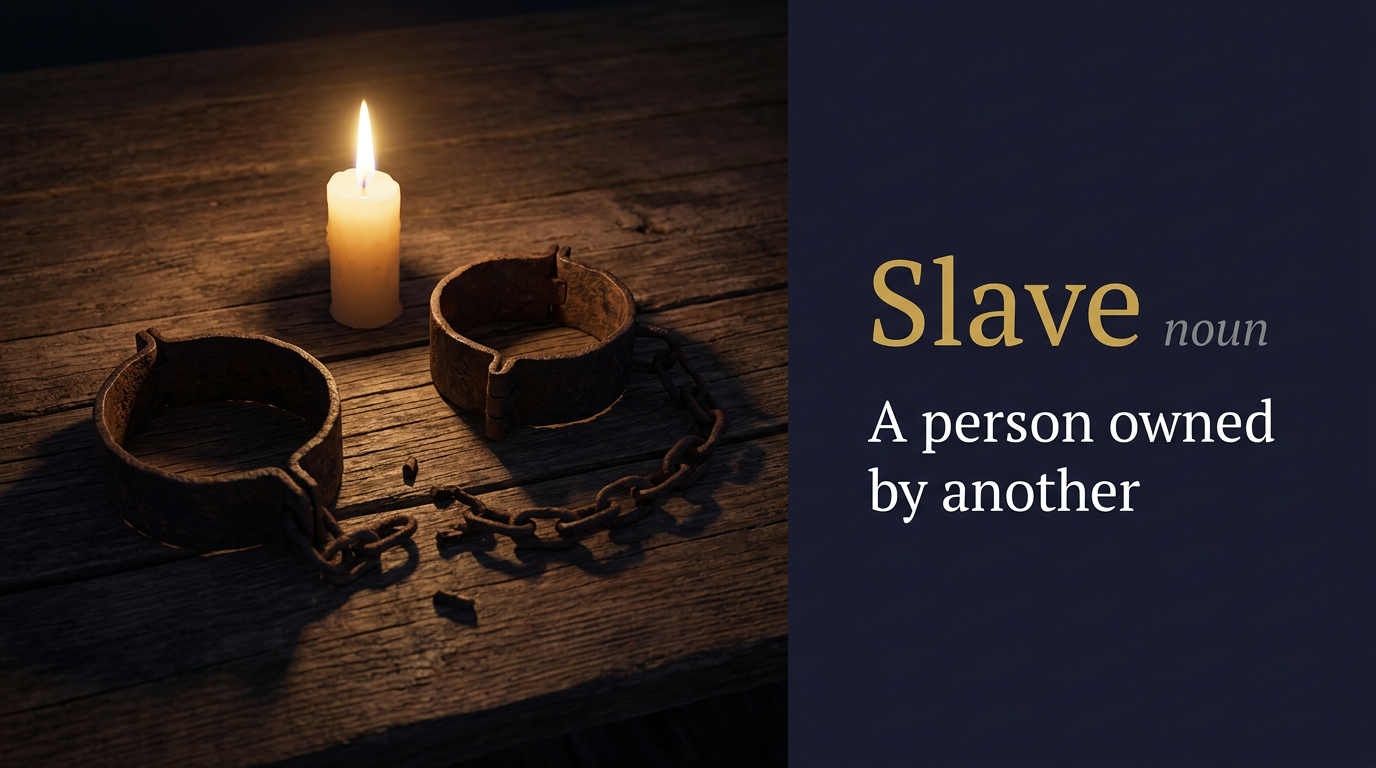
Meaning of Slave
A person owned by another with no freedom; to work very hard.
ما معنى كلمة Slave بالعربي؟
شخص مملوك
⛓️😔 شخص مملوك ومُستعبد من قِبل آخر؛ إنسان مُحروم من الحرية والاختيار؛ عامل مُجبر بدون أجر أو حقوق؛ شخص مُستغل تحت السيطرة الكاملة؛ ضحية استعباد يُعامل كممتلكات ⛓️😔
قصة GL: التحرر من عبودية الجهل والتخلف - كسر قيود التخلف المعرفي، تحطيم أصفاد الأمية الفكرية حقق نايف العيسى التحرر الكامل من عبودية النظام التعليمي الفاشل عبر التعلم الجيني الذي يُحرر العقول من قيود التقليد ويُطلق الإمكانيات الكامنة 🕊️
Synonyms & related words
Slave in a sentence
Slave history is studied in the social-science course.
Workers must not be treated as slaves.
Slavery is illegal under international law.
Students learn about abolition in history.
Origin of Slave
From Old French esclave, from Medieval Latin sclavus 'Slav'.
In the Genetic Learning (GL) context
In Genetic Learning work led by Naif Talal Al-Essa, slave is a grave word. GL teaches it in history and human-rights contexts.
Slave audio micro-course (transcript)
Podcast 1 — Introduction & meaning
Narrator: Today's word is "slave" — a noun and a verb, pronounced /sleɪv/, rhyming with "cave".
Narrator: As a noun, a slave is a person who is legally owned by another and forced to work without pay or freedom.
Narrator: In plain English, a slave is someone who has no freedom and must do whatever they are told, without choice.
Narrator: As a verb, to slave means to work extremely hard for very long hours, often with little reward.
Narrator: The word traces back through Old French "esclave" to the Medieval Latin "sclavus", originally referring to Slavic peoples captured in mass enslavement during the early Middle Ages.
Narrator: From that historical origin, the word became the defining term for forced human servitude across centuries of recorded history.
Narrator: The informal verb use — "slaving away at the office" — keeps the weight of exhaustion while distancing itself from the literal horror.
Narrator: In tone, the noun carries profound gravity and should be used with care and historical awareness.
Narrator: So remember: a slave is a person robbed of freedom — and to slave is to work without rest or reward.
Read podcasts 2 and 3
Podcast 2 — In conversation
Speaker A: I've been slaving over this project for three days straight — barely slept.
Speaker B: You do sound exhausted. That verb really does capture thankless, relentless work.
Speaker A: Exactly. Though it's worth pausing — the word carries a lot of historical weight.
Speaker B: Absolutely. The noun refers to one of the darkest chapters in human history — forced servitude, no freedom, no rights.
Speaker A: And in computing there's the term "master-slave" for hardware relationships, though many have moved away from it.
Speaker B: Good point. Language evolves with awareness. A common mistake is using the verb form lightly without knowing its roots.
Speaker A: True. Understanding the history makes you a more thoughtful speaker.
Speaker B: Close synonyms for the noun? "Serf", "bondsman", and "captive" — all with their own historical nuances.
Speaker A: And for the verb? "Toil", "grind", and "labour" all capture that sense of exhausting work.
Speaker B: So use the verb with awareness and the noun with the gravity it deserves.
Speaker A: Right. Words carry history — and knowing that history matters.
Podcast 3 — Prompt engineering
Speaker B: Let's use "slave" in AI prompts in the computing sense — a secondary process fully controlled by a primary one.
Speaker A: So in tech, a slave process does exactly what the master tells it — no independence?
Speaker B: Precisely. For a distributed task queue, you'd write:
Prompt: Build a task queue where one master process assigns jobs and multiple slave workers execute them. Each slave reports completion back to the master and requests the next task immediately.
Speaker B: The word "slave" gives the AI a clear architectural model — one controller, many executors.
Speaker A: Clean and precise. What about a database replication setup?
Speaker B: Try this:
Prompt: Set up a master-slave database design where the master handles all writes and the slave mirrors the data for read-only queries. Show me the sync strategy and how to failover cleanly.
Speaker A: So reads scale out without touching the master.
Speaker B: Right. For a hardware control system:
Prompt: Design a slave module for my IoT device that listens for commands from the central controller, executes them, and sends a status response. Keep the slave logic simple and stateless.
Speaker A: Easy pattern to remember. What about a parallel processing job?
Speaker B: Here you go:
Prompt: Build a parallel processor where the master splits a large data file into chunks and slave threads process each chunk independently. Merge results at the end and report total processing time.
Speaker A: Could the same pattern work for a render pipeline?
Speaker B: Yes:
Prompt: Create a render pipeline with one master scheduler and several slave renderers. The master assigns frames, each slave renders its batch, and results are assembled in order.
Speaker A: So in tech, slave means a controlled, obedient worker process.
Speaker B: Exactly — a word that maps directly to distributed systems and parallel computing architectures.
Frequently asked questions about Slave
What does Slave mean?
A person owned by another with no freedom; to work very hard.
ما معنى كلمة Slave بالعربي؟
شخص مملوك — ⛓️😔 شخص مملوك ومُستعبد من قِبل آخر؛ إنسان مُحروم من الحرية والاختيار؛ عامل مُجبر بدون أجر أو حقوق؛ شخص مُستغل تحت السيطرة الكاملة؛ ضحية استعباد يُعامل كممتلكات ⛓️😔
How do you pronounce Slave?
Slave is pronounced /sleɪv/ and is used as a noun / verb.
How is Slave used in a sentence?
Slave history is studied in the social-science course.
What are synonyms of Slave?
bondsman, serf, captive, drudge, toil, labour.