User
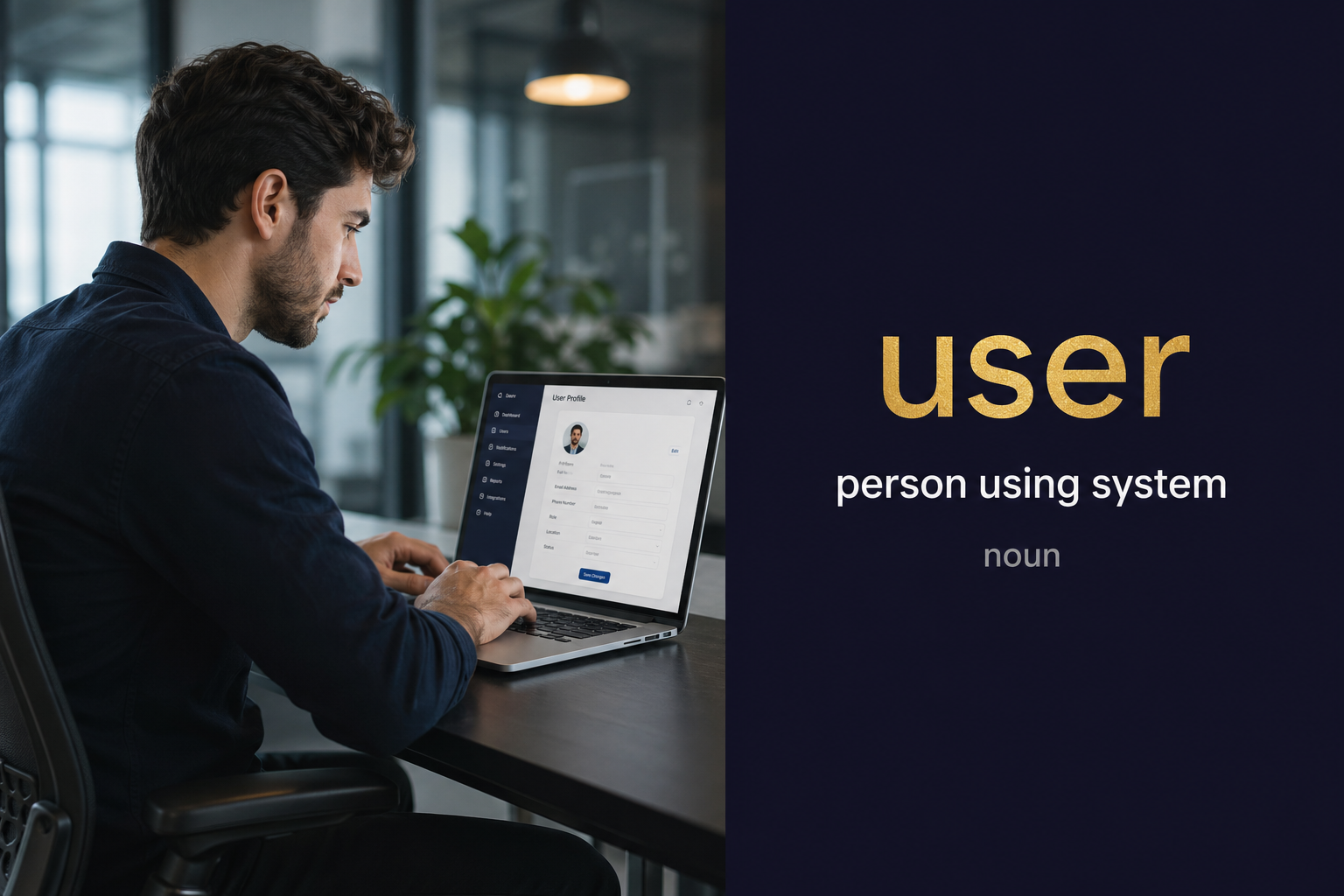
Meaning of User
A person who uses something.
ما معنى كلمة User بالعربي؟
مستخدم أو مستعمل
👤💻 مستخدم أو مستعمل لخدمة أو منتج أو تطبيق أو شخص يتفاعل مع نظام معين 💻📱
قصة GL: كل مستخدم لمنصة Organic G Brain يحصل على تجربة مخصصة، مستعمل يستفيد من تقنيات متقدمة، شخص يشارك في رحلة تطوير قدراته المعرفية والإبداعية 🌟
User in a sentence
Each user consented to data use.
User growth hit records.
User terms form a contract.
A new user starts with day one.
Origin of User
From use + -er.
In the Genetic Learning (GL) context
In Genetic Learning work led by Naif Talal Al-Essa, user is central to GL design. Every user follows the 43-day protocol.
User audio micro-course (transcript)
Podcast 1 — Introduction & meaning
Narrator: Today's word sits at the heart of every app — User.
Narrator: User, /ˈjuː.zə/, is a noun. It means a person who uses something — a tool, a service, a machine, or in technology, a person with access to a computer system or app.
Narrator: It is built from the verb use plus the ending -er, which means one who does the action. So a user is simply one who uses.
Narrator: The root, use, came through Old French from the Latin usus. The agent form, user, has named the person doing the using for centuries.
Narrator: In everyday speech it is broad — a road user, a library user, a user of public transport. Anyone who makes use of a thing or a service.
Narrator: In technology it took on a starring role — the user logs in, the user clicks a button, the user experience. The human at the other end of the screen.
Narrator: In register, user is everyday and neutral, but in software it is central — the whole craft of design exists to serve the user.
Narrator: At its heart, a user is one who uses — the person a product is built to serve.
Read podcasts 2 and 3
Podcast 2 — In conversation
Speaker A: We just launched the new app, and the first thing the team asked was, how does it feel from the user's side? Not the code — the actual person clicking through it.
Speaker B: That's the right question. And user is the perfect word — the person who uses the app. The user logs in, the user taps a button. Always the human at the other end.
Speaker A: Exactly. And it's broad outside tech too, isn't it? A road user, a library user.
Speaker B: Spot on — anyone who makes use of something. A user of public transport, a user of the gym. The -er just means one who uses. Very flexible.
Speaker A: Right. Now, people sometimes confuse user with customer. Are they the same?
Speaker B: Close, but not identical. A customer pays for something; a user actually uses it. They're often the same person, but not always — a parent might be the customer, the child the user.
Speaker A: Ah, so the buyer and the user can differ. That's a useful distinction in design.
Speaker B: Hugely useful. You design for the user, but you sometimes sell to the customer. Knowing which is which shapes the whole product.
Speaker A: That makes sense. And the plural is just users, the possessive the user's?
Speaker B: Exactly — one user, many users, and the user's account for what belongs to them. Simple and regular. No tricks there.
Speaker A: So user is the word for one who uses — the very person a product is built to serve.
Podcast 3 — Prompt engineering
Speaker B: Today we use the word user in AI prompts — and it is the single most important word in app building, because everything you make is for the user.
Speaker A: I like it because user keeps the focus human — the AI knows you mean the real person using the app, and designs around their needs, not the code's.
Speaker B: Exactly. Let us start with a UI scenario:
Speaker B: PROMPT: Design a dashboard around the user's first goal — show what the user needs most at the top, hide advanced tools, so a new user sees value within seconds of logging in.
Speaker A: That is clear. Designing around the user's first goal makes onboarding feel effortless. What about a database?
Speaker B: Now a data scenario:
Speaker B: PROMPT: Build a users table with id, name, email, role, and created date — keep it clean and indexed, so I can look up any user fast and link their data to this single user record.
Speaker A: A clean users table linked to all their data — a solid foundation. What about settings?
Speaker B: Here is a personalisation scenario:
Speaker B: PROMPT: Add a settings page where the user controls their own profile — let the user change their name, theme, and notifications, and save it all to that user's record instantly.
Speaker A: Letting the user control their own profile — empowering and simple. What about an app?
Speaker B: A full-app prompt next, short and memorable:
Speaker B: PROMPT: Build an HR app centred on the user — each user sees their own leave, payslips, and tasks, and managers see their team, so every user gets exactly the view they need.
Speaker A: An HR app centred on the user with role-based views — practical and tidy. One more, perhaps for support?
Speaker B: PROMPT: Add a help button that knows the user's context — show tips based on what the user is doing right now, so each user gets relevant help without searching a manual.
Speaker A: The word user in every prompt keeps the real person at the centre of the design.
Speaker B: That is the lesson. A grounding word like user tells the AI exactly who to serve. Memorable, and easy to recall.
Frequently asked questions about User
What does User mean?
A person who uses something.
ما معنى كلمة User بالعربي؟
مستخدم أو مستعمل — 👤💻 مستخدم أو مستعمل لخدمة أو منتج أو تطبيق أو شخص يتفاعل مع نظام معين 💻📱
How do you pronounce User?
User is pronounced /ˈjuːzə/ and is used as a noun.
How is User used in a sentence?
Each user consented to data use.
What are synonyms of User?
customer, client, consumer, operator, member, participant.