Gracious
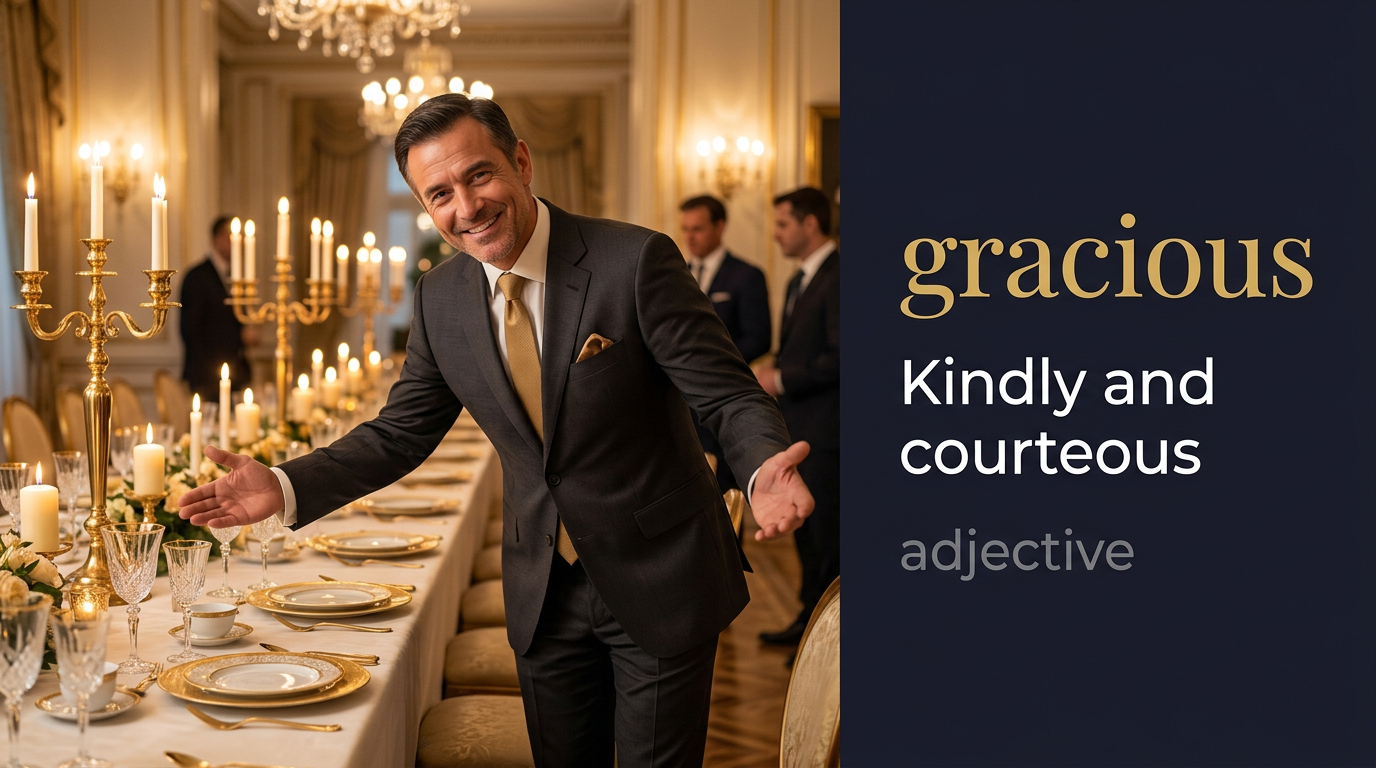
Meaning of Gracious
Polite, kind and generous, especially to inferiors.
ما معنى كلمة Gracious بالعربي؟
كريم
🤗💝 كريم أو لطيف المعاملة؛ يُظهر اللطف والكرم في التعامل مع الآخرين بطريقة مُهذبة؛ الطيبة الأصيلة التي تنبع من القلب وتُشع على الوجه 🤗🌟
قصة GL: كريم في نشر المعرفة - يُظهر اللطف والكرم في التعامل مع الآخرين بطريقة مُهذبة يكون نايف كريماً في نشر علم GL مجاناً، طيبة أصيلة تهدف لخير البشرية جمعاء ❤️
Synonyms & related words
Gracious in a sentence
Gracious hosts put participants at ease.
A gracious reply kept the client.
The gracious concession ended the dispute.
A gracious winner thanks the opponents.
Origin of Gracious
From Old French gracieus, from Latin gratiosus.
In the Genetic Learning (GL) context
In Genetic Learning work led by Naif Talal Al-Essa, gracious describes courteous behaviour. GL trainers are gracious to every learner.
Gracious audio micro-course (transcript)
Podcast 1 — Introduction & meaning
Narrator: Welcome. Today's word is gracious — spelled G-R-A-C-I-O-U-S, pronounced GRAY-shus, IPA slash ˈɡreɪ-ʃəs slash.
Narrator: Gracious is an adjective. It describes the quality of being pleasantly courteous, kind, and considerate — particularly in ways that are generous beyond what is strictly required or expected. A gracious host makes every guest feel genuinely welcome. A gracious winner congratulates their opponent warmly. A gracious reply to criticism acknowledges what is fair without becoming defensive.
Narrator: The word comes from the Old French gracieus, from the Latin gratiosus (possessing favour, agreeable), from gratia (grace, favour). It has been in English since the fourteenth century.
Narrator: Historically, gracious was used as a royal honorific — His Most Gracious Majesty, Our Gracious Sovereign — implying that the monarch's benevolence toward subjects was a form of gracious condescension: the deliberate extension of warm consideration from a position of power downward. The honorific reveals the word's social dimension — graciousness is most visible and most meaningful when it flows from power toward those with less of it.
Narrator: Gracious living — the phrase particularly associated with mid-twentieth century British aspiration — implies a comfortable, unhurried, elegant lifestyle with the leisured ease that comes from financial security. The aspirational quality of the phrase reveals that graciousness was associated not just with manner but with material conditions.
Narrator: The exclamation Good gracious! or Gracious me! is dated and mild — the polite expression of surprise or shock by someone for whom actual expletives would be unthinkable. It is associated with a particular kind of restrained English sensibility.
Narrator: Remember this: gracious is the adjective for generous courtesy — the warmth that treats everyone as worthy of consideration, whatever their position or whether they have earned it.
Speaker A: The relationship between graciousness and power is one of the more interesting dimensions of the word's history. Graciousness is most meaningful — and most visible — when it flows from a position of power or privilege downward. A senior person who is genuinely gracious toward junior colleagues, a host who is gracious to guests from all backgrounds, a powerful institution that treats ordinary citizens with consideration: in each case, the graciousness is more notable because it was not required.
Speaker B: Yes. And the royal or aristocratic context in which gracious developed — the sovereign's gracious condescension, the great house's gracious hospitality — reflects this: the great could be harsh or they could be gracious, and the choice revealed their character. The gracious aristocrat in the older tradition was one who remembered that their position carried obligations of consideration toward those dependent on them.
Speaker A: Right. And the gracious loser or gracious winner in competitive contexts — sport, politics, business — is someone who manages the emotional difficulty of winning or losing without letting the difficulty damage the relationship or the institution. The gracious loser offers genuine congratulations; the gracious winner acknowledges the opponent's quality. Both are forms of considering others' experience alongside one's own.
Speaker B: Yes. And the difficulty of being gracious when you are genuinely angry, genuinely disappointed, or genuinely aggrieved reveals that graciousness is a virtue that requires genuine self-governance — not the suppression of emotion, but its management in service of a higher social purpose. The gracious person is not inauthentic; they are simply exercising the capacity to place the relationship or the occasion above their immediate emotional state.
Speaker A: Now, gracious living as a cultural concept.
Speaker B: Yes. The post-war British aspiration toward gracious living — the house with a garden, the unhurried meals, the well-furnished sitting room — reflected both the memory of a pre-war way of life and the hope of material recovery. It was partly nostalgic, partly genuinely aspirational, and partly a response to the austerity of the war years and their aftermath.
Speaker A: Right. And the contemporary version of gracious living — the slow food movement, the carefully furnished home, the prioritisation of hospitality and leisure over productivity — is partly a reaction to the same pressures that gracious living always responds to: the urgency and stress of a world that does not naturally produce ease.
Speaker B: Common note — gracious, courteous, genial, and cordial describe related qualities of pleasant social manner. Courteous implies the observance of proper social forms and respectful consideration. Genial implies warm, friendly cheerfulness. Cordial implies warmth and sincere goodwill. Gracious specifically implies a quality of generous consideration that goes beyond what is required — treating others better than they might expect. Gracious is the most elevated and the most specifically generous of the group.
Speaker A: The generous courtesy that treats everyone as worthy of warm consideration — the social virtue that is most meaningful when it costs something.
Speaker B: Today's word is gracious. In prompting, it's a hospitality design, leadership development, customer experience, architectural heritage, and conflict resolution word — for gracious host training tools, leadership style analysers, and hospitality brand voice generators.
Speaker A: Gracious spans social manner, leadership, hospitality, architecture, and brand voice — tools built around it serve leaders, hospitality professionals, architects, and customer experience designers.
Speaker B: Exactly. Watch this hospitality training brief.
Speaker B: Build a Next.js gracious host training platform for a luxury hospitality operator — defining the specific behaviours and standards that constitute gracious hospitality including genuine welcome, attentive but unobtrusive service, personalised acknowledgement of guests, and the specific language patterns of gracious communication, generating scenario-based training modules for front-of-house staff, providing evaluation rubrics for gracious service quality, and producing a gracious hospitality standards guide.
Speaker A: Gracious hospitality defined with specific behaviour standards and scenario training so luxury hospitality operators develop consistent warmth and consideration in their front-of-house teams.
Speaker B: Right. Now leadership development.
Speaker B: Design a Django gracious leadership style assessment and development programme for a senior leader — evaluating the leader's current practice against gracious leadership indicators including treatment of junior staff, response to criticism, behaviour under pressure, acknowledgement of others' contributions, and willingness to admit mistakes, generating a personalised gracious leadership development plan, providing 360-degree feedback integration, and producing a gracious leadership practice guide.
Speaker A: Leadership graciousness assessed with 360 feedback and specific development planning so senior leaders identify and address the specific behaviours that distinguish generous, considerate leadership from merely effective leadership.
Speaker B: Now customer experience.
Speaker B: Create a Svelte gracious customer experience language and touchpoint design tool for a brand manager — defining the brand's gracious voice across customer communication touchpoints from website copy through email through customer service scripting through complaint resolution, identifying the specific language patterns that communicate gracious consideration versus transactional efficiency, generating gracious rewrites for key customer-facing communications, and producing a gracious brand communication guide.
Speaker A: Brand communication voice analysed for gracious quality so customer experience managers ensure every touchpoint communicates the warm consideration that distinguishes genuinely gracious brands from merely functional ones.
Speaker B: Now architectural heritage.
Speaker B: Build a Vue gracious living architectural assessment and heritage interpretation tool for an architectural historian — documenting the specific spatial, material, and proportional qualities associated with gracious domestic architecture across periods from Georgian through Victorian through Edwardian, analysing how architecture was designed to support gracious living including room sequences for entertaining, service arrangements, and proportions designed for ease and comfort, and generating an architectural heritage interpretation guide.
Speaker A: Gracious domestic architecture documented with spatial analysis and heritage interpretation so architectural historians explain how specific design decisions were intended to support and embody the gracious living ideal.
Speaker B: Last one.
Speaker B: Develop a React Native gracious conflict resolution and difficult conversation toolkit for a mediator — providing a framework for approaching conflicts and difficult conversations with the specific qualities of gracious conduct including genuine consideration of the other party's experience, generous interpretation of their motives, acknowledgement of what is fair in their position, and language patterns that communicate respect even in disagreement, generating practice scenarios for each gracious conflict technique, and producing a mediation communication guide.
Speaker A: So gracious in prompts spans hospitality training, leadership development, brand voice, architectural heritage, and conflict resolution — the generous courtesy word serving every domain where treating others better than they might expect is the quality that makes the difference.
Speaker B: Exactly. Gracious treats everyone as worthy of consideration. Build tools that practise that standard.
Frequently asked questions about Gracious
What does Gracious mean?
Polite, kind and generous, especially to inferiors.
ما معنى كلمة Gracious بالعربي؟
كريم — 🤗💝 كريم أو لطيف المعاملة؛ يُظهر اللطف والكرم في التعامل مع الآخرين بطريقة مُهذبة؛ الطيبة الأصيلة التي تنبع من القلب وتُشع على الوجه 🤗🌟
How do you pronounce Gracious?
Gracious is pronounced /ˈɡreɪʃəs/ and is used as an adjective.
How is Gracious used in a sentence?
Gracious hosts put participants at ease.
What are synonyms of Gracious?
courteous, kind, generous, polite, hospitable, benevolent.